
When a Russian Naval Drill Isolated Gullfaks

The airspace over the Tampen area (which includes the Gullfaks and Statfjord
fields, among others) is typically very busy. For nearly 30 years, Norwegian
authorities have therefore designated the area as controlled airspace. As part
of that, radar has also been installed on one of the Gullfaks platforms. The
point of these measures is to prevent unwanted incidents between aircraft.[REMOVE]Fotnote: https://www.aftenbladet.no/aenergi/i/Xz6zx/kystvakten-stanset-russisk-hangarskip
December 11, 2007, would turn out to be an especially hectic and chaotic day.
That day, a Russian carrier group was in exercise mode in the Tampen area, led
by Admiral Kuznetsov. The military activity forced a suspension of helicopter
traffic to Gullfaks, Statfjord, and Oseberg. Beyond the physical risk posed by
the exercise, Norwegian communications were significantly disrupted by radio
traffic between Russian fighters and the carrier.
After repeated attempts, the Norwegian Coast Guard managed to establish radio
contact with Admiral Kuznetsov to convey the consequences the activities were
having for Norwegian offshore operations in the area. The Russians then ended
the drills and headed west.[REMOVE]Fotnote: https://www.aftenbladet.no/aenergi/i/Xz6zx/kystvakten-stanset-russisk-hangarskip
The incident drew international attention due to concerns about civil aviation
safety.[REMOVE]Fotnote: https://www.nbcnews.com/id/wbna22357760
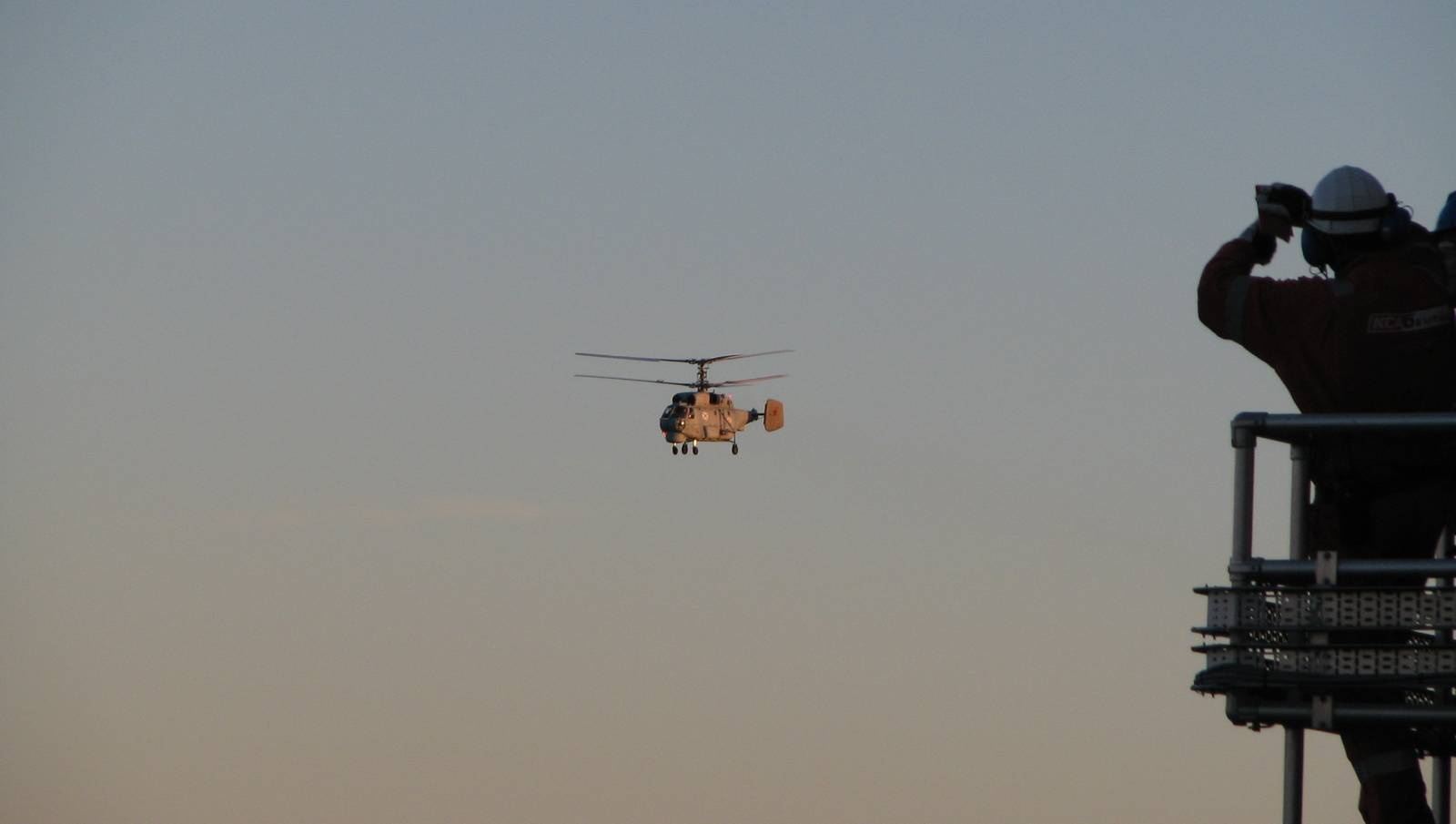
In the aftermath, Norwegian authorities lodged a protest with Russia.
The Russian side maintained that no international rules had been broken, but
said that similar activities would be discontinued in the future because they
obstructed helicopter traffic to and from Norwegian installations.[REMOVE]Fotnote: https://www.nrk.no/norge/russerne_-det-skal-ikke-skje-igjen-1.4286441
Gullfaks from Hydro to StatoilTen Kilometers Later: The Story of Gulltopp