
“Welcome aboard!”

Everyone coming out to a platform for the first time will be welcomed by the Offshore Installation Manager (OIM). You will watch a safety video and receive brochures with a map of the platform and standard onboard work procedures. You will also be issued personal protective equipment (PPE).
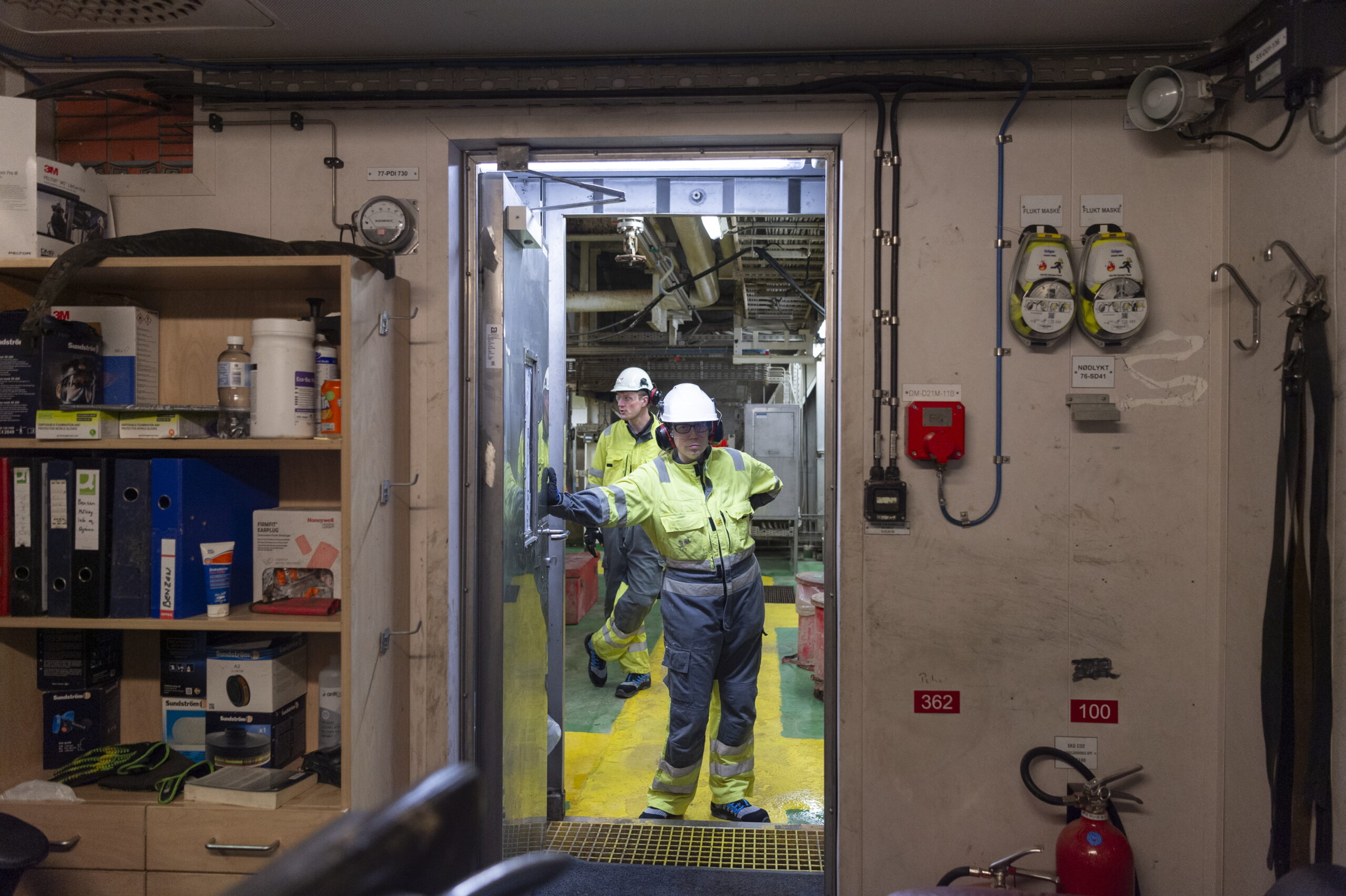
You will also do a familiarisation tour. The purpose is to get to know the platform overall, with special focus on safety. It is wise to note where your lifeboat is and the quickest route to it. Everyone is assigned a lifeboat located near the accommodation block. In the drilling area, at the opposite end of the platform, there are lifeboats as well. It is worth noting where those are too, especially if you will be working in production.
Next you will be shown to your cabin (where you hang up the survival suit you were issued at the heliport) and to the locker room where those working out in the plant leave their work clothes. If you will be working regularly on the platform, you will also be given a locker where you can store items you do not need to take home.
After your talk with the OIM, he or she will pair you with one of your closest colleagues. That person will help you get set up to carry out your tasks onboard and introduce you to the unwritten rules that are practiced on the platform.
The unwritten code
A platform nomad (someone who moves between different platforms – regularly or now and then), or someone who works on a different platform, will recognise some of these unwritten rules. Here are a few from Gullfaks A:
- Wash your hands before you enter the mess hall (hygiene).
- Do not use your phone after you have washed your hands (hygiene).
- Sanitize your hands and take a clean plate if you go back for more food (hygiene).
- Hang up your chair when you are finished eating.
- Walk quietly in the accommodation block. People may be sleeping.
- You can have your clothes washed in the laundry, but remember that everything is washed at 60°C.
- Drink plenty of water! The ventilation makes the air dry.
- The platform offers a wide range of leisure activities: a cinema, TV lounge, library, pool table, gym, sports hall, and its own fishing spot.
- The kiosk is open a few hours in the afternoon. There you can buy sweets and toiletries, among other things.
If you are in doubt, there is always someone you can ask, and if you are on the shy side, it can pay to look around and copy what the person next to you is doing.
“Enjoy your time off!”
When your working days are over (typically 14 days if you are on a fixed rotation), you need to pack your bag (you might leave your “offshore wardrobe” in the locker), put your bedding and coveralls in for washing, find your survival suit, and head up to the reception area. If you are lucky, the helicopter is on schedule.
Wearing your survival suit, switch off your phone and get ready to insert earplugs and put on hearing protection. First you will watch the same safety video you saw at the heliport before you flew out. When you hear the helicopter arrive, you and your colleagues can take the elevator up to the helideck.