
Training Center at Sandsli

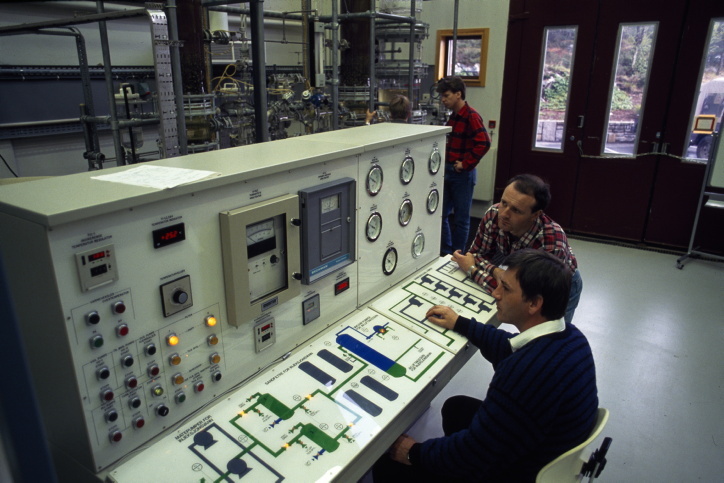
In addition to housing Statoil’s operations organization in Bergen, the office facilities at Sandsli also served as a training center, featuring a full-scale simulator and control room. This allowed employees to become familiar with their tasks before being deployed to the platform.
Onshore Training
By initiating training before the platform became operational, Statoil was able to offer a more comprehensive program for future platform personnel. This ensured a smoother start-up phase, allowing employees to familiarize themselves with their tasks more efficiently. Additionally, offshore personnel costs were high. If parts of the training could be conducted onshore rather than offshore, it would result in cost savings.
The training center helped employees not only develop general offshore competence but also gain specific knowledge of the unique characteristics of the Gullfaks platform.[REMOVE]Fotnote: Lerøen, B. V. (2006). 34/10 Olje på norsk – en historie om dristighet. Statoil, 91.
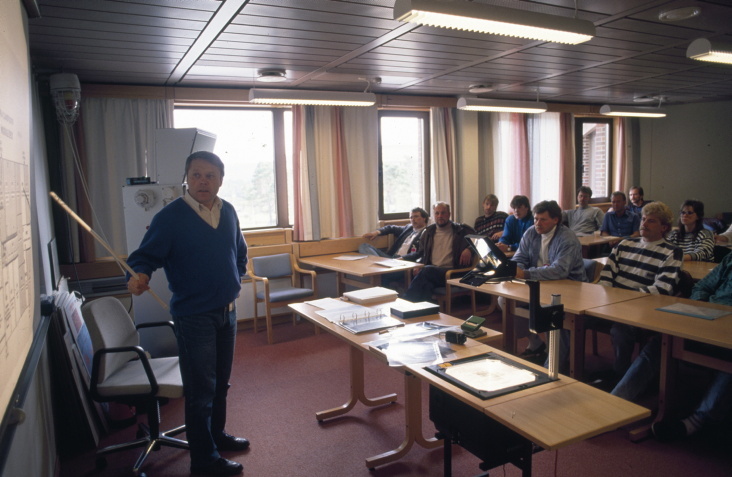
The facility was designed to accommodate up to 70 participants at a time, offering specialized courses on disciplines, systems, equipment, and components, as well as a dedicated simulator course. Some of these courses were organized by Statoil, while others were conducted by external experts, including suppliers of specific platform components who had specialized knowledge of their own equipment. Training began in September 1985, and the first participants “graduated” five months later, in February 1986.
In addition to training personnel, the training center also functioned as a testing facility before Gullfaks was put into operation. By simulating various scenarios, Statoil was able to verify that procedures worked as intended. These simulations revealed several areas where protocols could be improved and manuals updated.[REMOVE]
Fotnote: Statoil. (1985). Opplæringssenter Gullfaks. Status: internavis for Statoil-ansatte (Nr. 4, s. 34)
Design and Training Program
The center was specifically designed to replicate the relevant systems and equipment on Gullfaks A as closely as possible.[REMOVE]Fotnote: Statoil. (1984). Nytt fra treningssenteret. Status: internavis for Statoil-ansatte (Nr. 3, s. 5). It included a full-scale control room where future control room operators could practice handling various offshore situations.
Before Gullfaks A began production, a total of 30 control room operators were trained in the control room simulator. They trained in groups of three to replicate real working conditions on the platform. Initially, they were tasked with managing the control room under normal conditions. Separated by a glass wall, an instructor observed their actions. The instructor could override systems, introduce faults, set up “traps,” and simulate incidents requiring response.
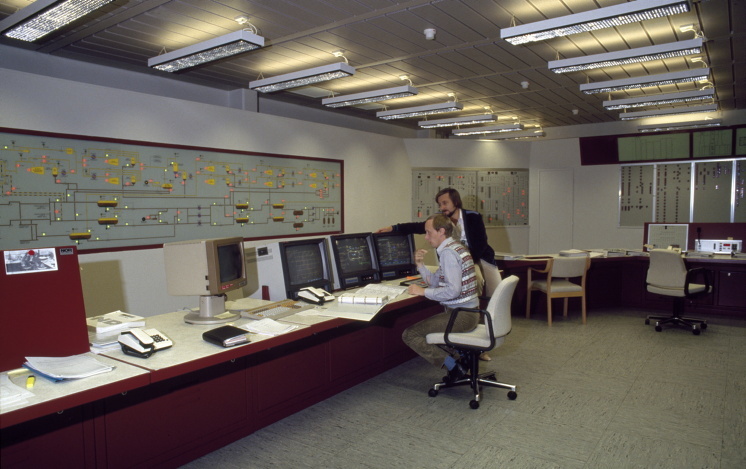
A few years later, the control room simulator was expanded to include interactions with Gullfaks B, which was designed to send its oil to Gullfaks A instead of storing it.
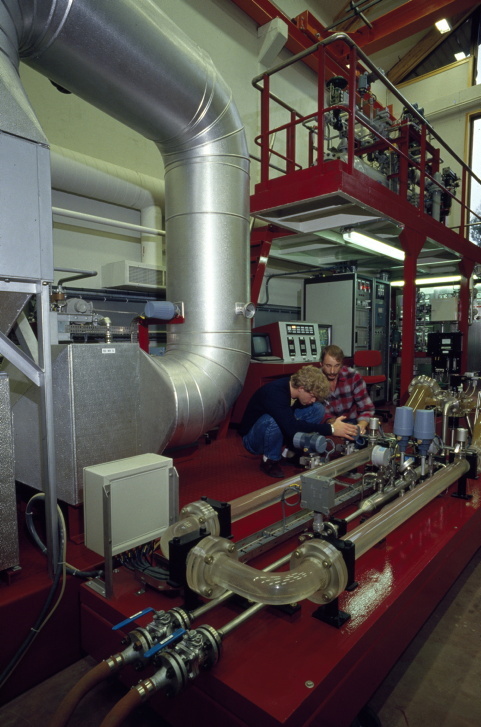
The training center also contained several models of the equipment used on the platform. This enabled employees in areas such as process operations, drilling, and production to become familiar with their tasks before being deployed offshore. In an interview with Statoil’s internal newsletter Status, training manager Odd Folkedal emphasized the importance of broad expertise and multi-skill training at the center. An oil platform is a highly complex system, and understanding how its different components interact is essential.
A First in Norway
A training center of this scale had never before been developed for Norwegian offshore workers. However, the concept itself was not entirely new. The center’s manager, Arne Godal, stated in an interview with Status that he had drawn inspiration from Aberdeen, where Conoco had established a similar training program for workers heading to the Hutton platform in the British sector.[REMOVE]Fotnote: Statoil. (1984). Nytt fra treningssenteret. Status: internavis for Statoil-ansatte (Nr. 3, s. 5). The full-scale control room concept was also based on experiences from Swedish training centers for nuclear power plants.[REMOVE]Fotnote: Statoil. (1985). Opplæringssenter Gullfaks. Status: internavis for Statoil-ansatte (Nr. 4, s. 34) https://www.nb.no/items/cbd099153df8a4db71c6c792fc033043?page=29&searchText=oppl%C3%A6ringssenter%20gullfaks
From Gandsfjorden to DigernessundetGullfaks B slipform halted