
Tragedy at Turøy

The helicopter, an Airbus Helicopters EC 225 Super Puma registered LN-OJF, suddenly and without warning lost its main rotor. Moments later, it plummeted 640 meters to the ground. All 13 people on board died instantly. The rotor continued on its own and landed on a neighboring island approximately 550 meters away.
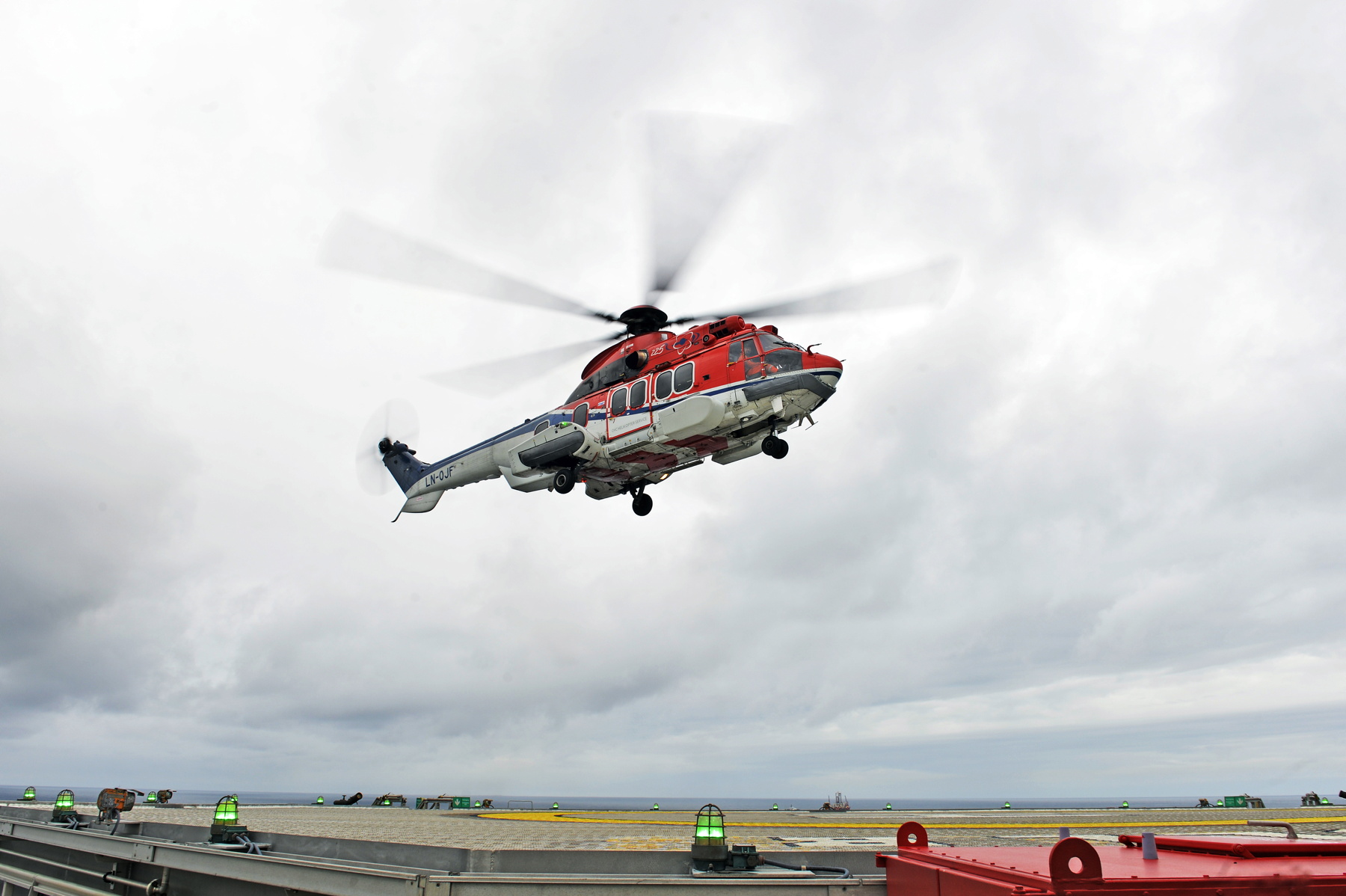
Everything appeared normal during the flight from Gullfaks, and the pilots received no warning before the rotor detached. The Accident Investigation Board Norway (AIBN) concluded in its 2018 report (2018/04) that the pilots could not have prevented the accident, and their actions had no impact on the outcome.[REMOVE]Fotnote: Statens havarikommisjon for transport (2018). Sammendragsrapport om luftfartsulykke nær turøy, øygarden kommune i Hordaland 29. April 2016 med airbus helicopters ec 225 lp, ln-ojf, operert av chc helikopter service as. Rapport SL 2018/04. https://havarikommisjonen.no/Luftfart/Avgitte-rapporter/2018-04.
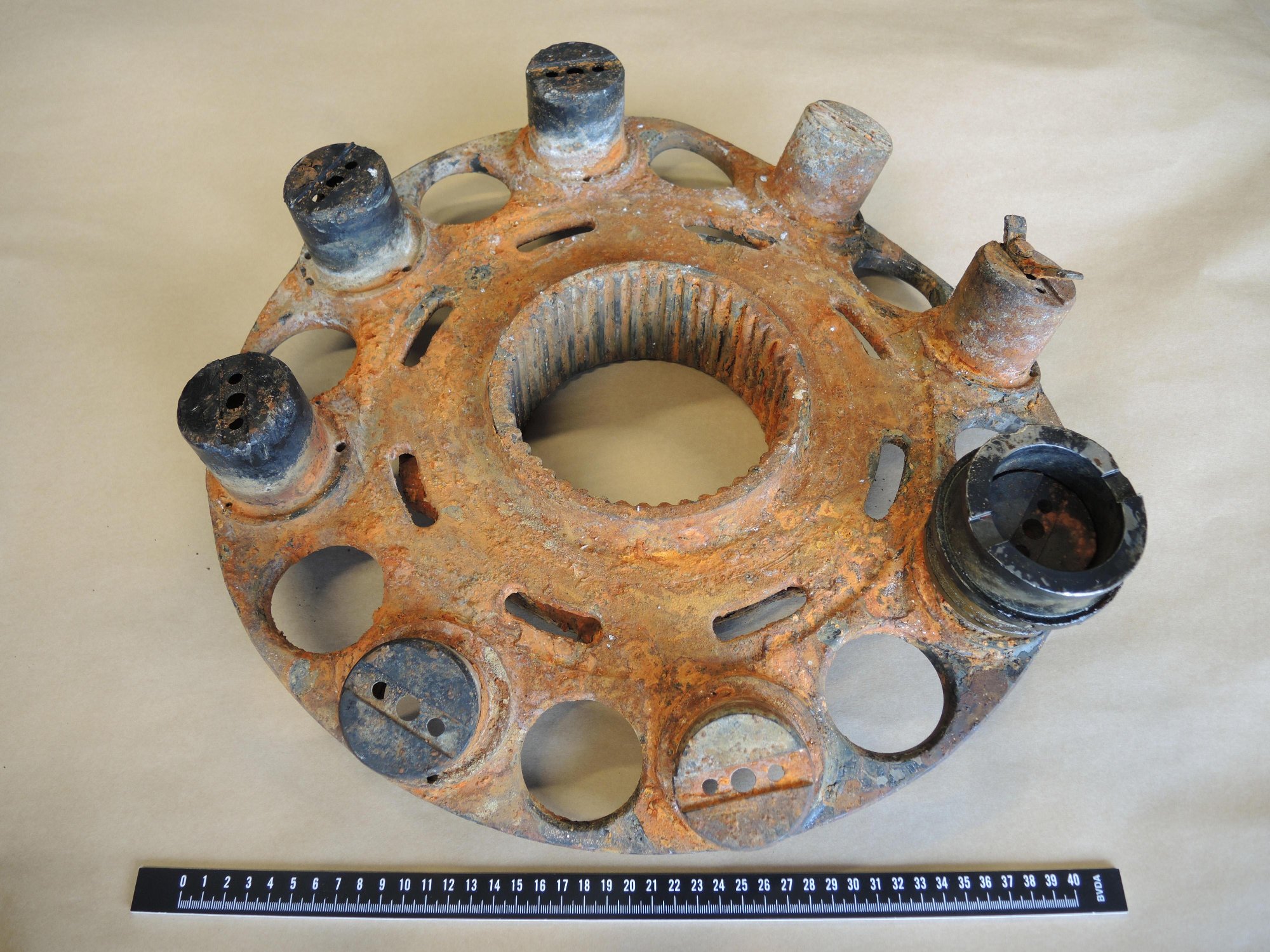
CHC Helikopter Service operated the helicopter on behalf of Statoil and lost two pilots in the crash. The remaining victims were employees of six different companies. The direct cause was a fracture in one of eight second-stage planetary gears in the main gearbox[REMOVE]Fotnote: A planetary gear is a mechanism for altering rotational transmission, in which planet gears revolve around a central sun gear.
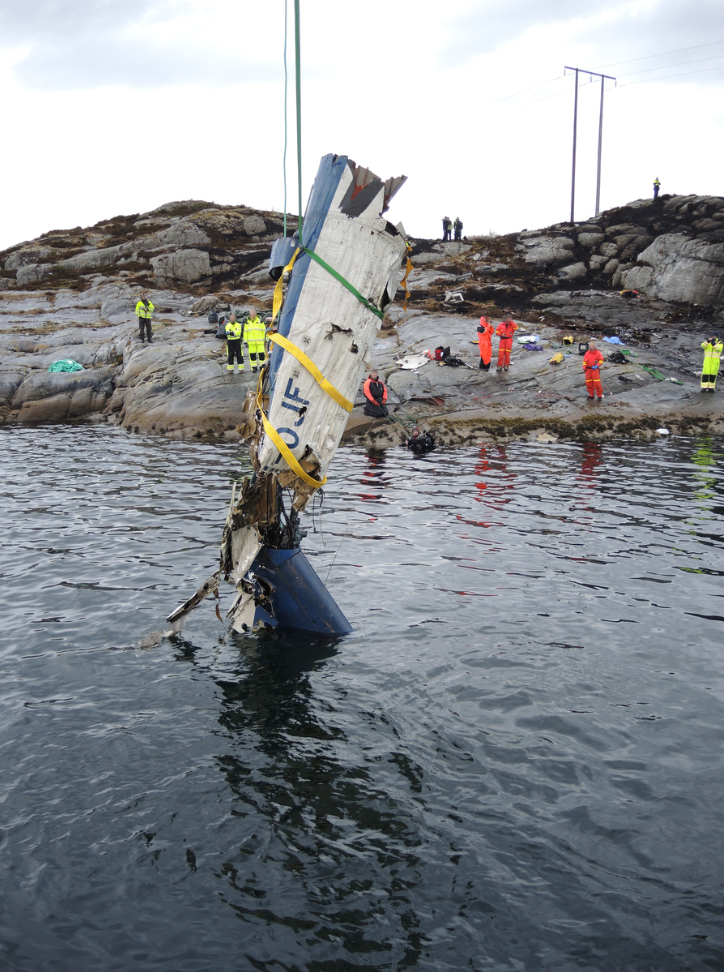
The crack originated from a small surface defect and developed undetected until catastrophic failure. The AIBN found no evidence of maintenance errors contributing to the accident, stating: “The failure developed in a way that was difficult to detect.”[REMOVE]Fotnote: Statens havarikommisjon for transport (2018). Sammendragsrapport om luftfartsulykke nær turøy, øygarden kommune i Hordaland 29. April 2016 med airbus helicopters ec 225 lp, ln-ojf, operert av chc helikopter service as. Rapport SL 2018/04. https://havarikommisjonen.no/Luftfart/Avgitte-rapporter/2018-04.
The main gearbox drives the tail rotor, oil pumps, generators, and hydraulic systems. It also anchors the main rotor, transferring all rotor loads to the fuselage. A technical failure in this component is among the most serious alarms a helicopter pilot can receive.
An Unpopular Aircraft
The Super Puma had long been unpopular among offshore workers.[REMOVE]Fotnote: Honningøy, Kristi Haga. (2016. 29. april) – Et veldig upopulært helikopter blant de ansatte i Nordsjøen.NRK. – Et veldig upopulært helikopter blant de ansatte i Nordsjøen – NRK Norge – Oversikt over nyheter fra ulike deler av landet It was cramped, uncomfortable, and considered outdated. Worse, it had been involved in several accidents in recent years, including the 1997 Norne accident in Norway, which claimed 12 lives. The Turøy crash bore similarities to earlier incidents. Between 2009 and 2016, five serious Super Puma accidents occurred on the UK continental shelf, two of them fatal, with 20 lives lost. Three of these were due to gearbox failures, including the 2009 Peterhead crash, where the rotor separated from the fuselage 20 seconds after an oil pressure warning.[REMOVE]Fotnote: Department for Transport. (2011, februar). Report on the accident to Aerospatiale (Eurocopter) AS332 L2 Super Puma, registration G-REDL 11 nm NE of Peterhead, Scotland on 1 April 2009. https://assets.publishing.service.gov.uk/media/5422f86aed915d13710006cb/2-2011_G-REDL.pdf.
In 2012, two Super Pumas made emergency landings in the North Sea. Both had cracked gearboxes at the same location on the shaft. The helicopters were grounded for nine months.[REMOVE]Fotnote: Dalløkken. Per Erlien. (2016.29. april). I 2012 ble Super Puma satt på bakken og utbedret. Norsk turbindesigner advarte mot løsningen. Teknisk Ukeblad. I 2012 ble Super Puma satt på bakken og utbedret. Norsk turbindesigner advarte mot løsningen | Tu.no.
Compensation
After the Turøy crash, it took five years for the victims’ families to receive compensation. A confidential settlement was reached with Airbus.[REMOVE]Fotnote: Sindre Vik Helgheim, Christian Skaar Lura. (2021. 4. juni). Etterlatte etter Turøy-ulykken inngikk forlik med Airbus – får hemmelig sum. NRK. In 2017, Airbus admitted that safety measures could have prevented the crash.[REMOVE]Fotnote: NRK. (2017. 27. april). Airbus innrømmer at Turøy-ulykken kunne vært unngått. The mechanical defect was likely the same as in the Peterhead accident. Despite 17 safety recommendations issued after that crash, they were not adequately implemented.
The European Aviation Safety Agency (EASA) allowed Super Pumas to fly before the AIBN had concluded its investigation. Norway replaced its flight ban with a special safety directive, lifted in 2020. Statoil (now Equinor) chose not to resume use of the Super Puma. Since 2016, it has relied solely on the Sikorsky S-92 for offshore transport and search and rescue.[REMOVE]Fotnote: Equinor. (2024. 1. mars). Equinor sikrer ny helikopterkapasitet.

Concerns were raised about relying on a single helicopter type – S-92A – which lacked the latest technology. In 2024, Equinor ordered 15 new helicopters: ten Bell 525s and five AW189s, to be delivered between 2025 and 2030.[REMOVE]Fotnote: Equinor. (2024. 1. mars). Equinor sikrer ny helikopterkapasitet.
Regulatory Debate and EU Pressure
The Turøy crash reignited debate over EU aviation regulations. The proposed HOFO (Helicopter Offshore Operations) framework aimed to replace national rules with a unified European system. Critics warned this would remove Norway’s ability to enforce stricter safety standards. In 2017, the Norwegian Ministry of Transport argued that HOFO was not EEA-relevant, as the EEA agreement does not apply beyond 12 nautical miles offshore. In 2024, the EU renewed pressure to adopt HOFO, but Norway maintained its legal position.
A total of 218 offshore workers have died in helicopter accidents on the Norwegian and British continental shelves. Many of these involved the Super Puma model.
The Subsea Factory: A Milestone in Offshore InnovationShould the Condeep Giants Join UNESCO’s World Heritage List?