
The Oil Traders

The 2006 NRK documentary series Oljeriket (“The Oil Kingdom”) gave a rare glimpse into the working lives of oil traders negotiating sales and prices on behalf of Statoil.[REMOVE]Fotnote: NRK. (2006, 25. mai). Oljeriket (Episode 2 og 3). NRK. https://tv.nrk.no/serie/oljeriket/sesong/1/episode/PRHO97000304
Most of Statoil’s oil production, including that from Gullfaks, is shipped by tanker. This gives traders the flexibility to send the oil wherever it will fetch the best price. But it also creates constant pressure to find buyers in a volatile market.
Supply and demand
Market prices are constantly shifting, governed by the balance of power between buyers and sellers. Many buyers and few sellers drive prices up — and vice versa. The traders’ job is to extract the best possible deal. That often means pushing the other side to move just a few cents per barrel.
A few cents might sound trivial, but when multiplied by the number of barrels on a single tanker, it adds up to substantial sums.
The series follows Statoil trader Lise Gro Ekholdt as she wraps up negotiations for a cargo of Gullfaks C crude. In the end, the deal hinges on a single cent per barrel. That cent amounts to NOK 53,000 in total — small change in this context. The sale (to Conoco) is finalized, and Ekholdt tells the NRK crew she has just closed a deal worth around NOK 300 million (equivalent to half a billion in 2024 value). It’s just one of many such transactions carried out each week from Statoil’s Stavanger office.
This particular sale turned out to be the last ever marketed specifically as Gullfaks C crude. Since then, the oil has been blended with other production from the Gullfaks field.
The clock is ticking
The traders featured in Oljeriket describe a fast-paced work environment. Time, they say, tends to favour the buyer. Ideally, a cargo should have a confirmed buyer before loading. If not, the ship may have to idle offshore while waiting for a contract. That’s an expensive situation: hiring a shuttle tanker costs about $50,000 per day — or $75,000 per day in 2024 terms, Ekholdt explains in the series.
Buyers know this and use it to their advantage. A deal can take anywhere from minutes to several days. The closer the loading date, the more desperate the seller becomes. In that sense, time erodes the seller’s leverage. Traders at the Statoil office must move quickly to avoid being squeezed on price.
Big deals from Forus
In conversation with the Norwegian Petroleum Museum, Lise Gro Ekholdt — now with BP — recounts a career in oil and gas dating back to 1977. She worked in oil sales for Statoil from 1994 to 2015, much of it as a trader: the person who meets with buyers and negotiates on behalf of the company.
She is likely among the top — if not the top — oil seller in Europe by total value. Ekholdt has never attempted to tally the total value of the oil she’s sold, but the figure is undoubtedly massive.
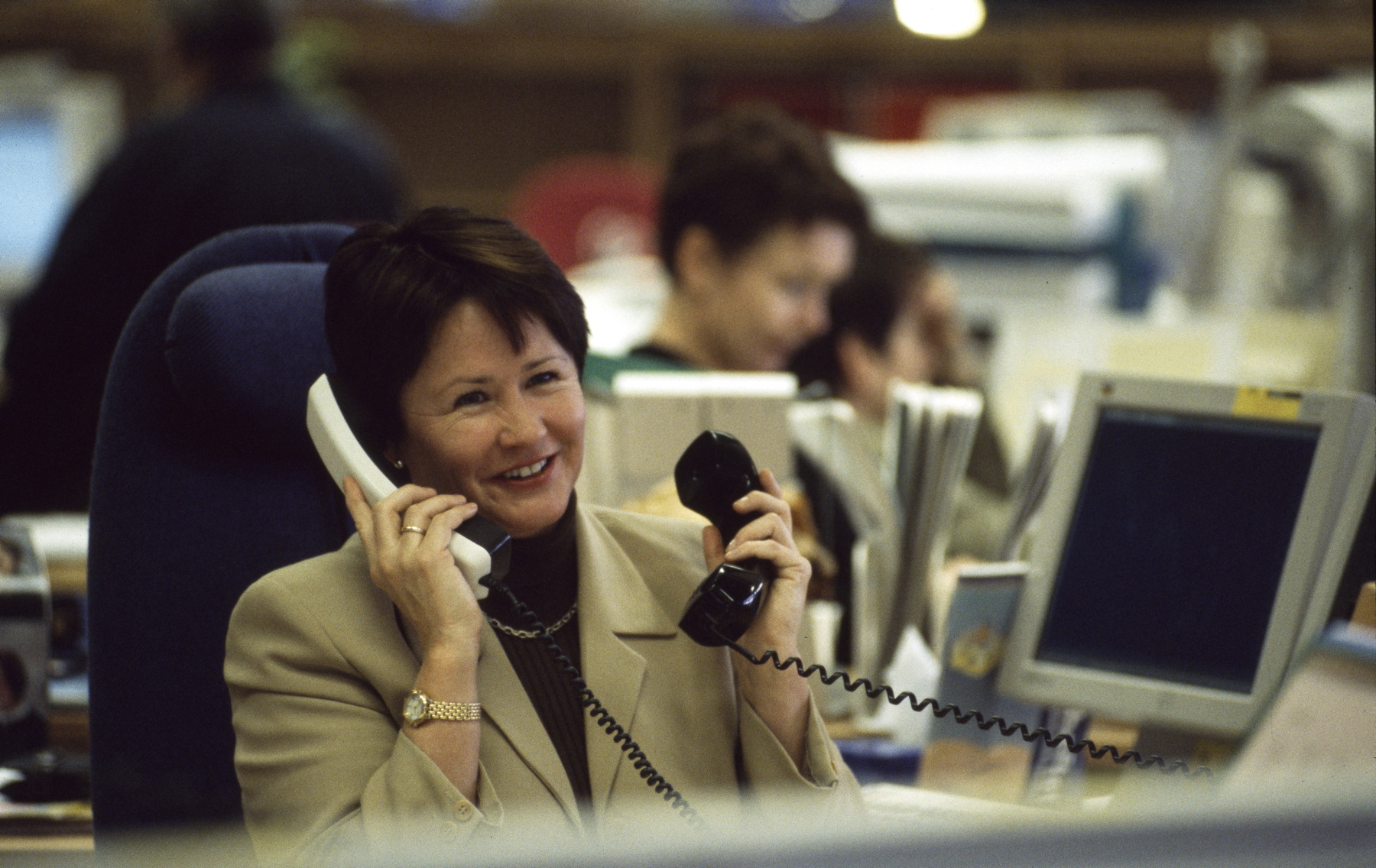
Put simply: if you were to pick a random Norwegian oil krone, there’s a decent chance it entered the country because Ekholdt once said, “Alright, we have a deal.”
When Oljeriket was filmed in 2005, Statoil’s office in Forus, Stavanger, was the company’s sole location for negotiating oil sales. Forus remains the beating heart of the operation, but by 2025 the trading floor has expanded to include offices in other cities. Some functions have moved to London, reflecting Statoil’s increasing involvement in international projects and the growing importance of trading third-party oil — oil the company has not produced itself.
Global, regional, and very local
While the oil market is global and crude prices (adjusted for quality) are roughly equal worldwide, regional dynamics still play a key role. If the price in one part of the world rises, supply shifts toward that region until the price evens out. Every player has an incentive to move oil where demand is strongest.
Ekholdt points to the war in Ukraine and ensuing Western sanctions as a clear example.
“Before 2022, most Johan Sverdrup shipments went to buyers in India and China. Just days after the sanctions on Russian oil came into effect, we began redirecting cargoes to Europe. That shift came because Russian oil supply to Europe dropped. Sverdrup crude shares many of the same qualities as the sanctioned Russian barrels. The change happened fast, and three years later, most of the oil is still going to Europe.”
“You need to know who you’re dealing with”
Although oil is traded globally, the actual network of buyers and sellers is relatively small. Oil sales aren’t like selling vacuum cleaners or vitamins. Few people in the world are in the market for a half-billion-kroner cargo of crude.
Geography also plays a major role in determining who trades with whom. Shuttle tankers have limited range, and the same set of buyers often show up again and again. In this sense, Northwestern Europe is a market within the market.
Because the same buyers frequently return, traders build long-term relationships.
Asked for her best advice to aspiring oil traders, Ekholdt emphasizes knowing your customers and building trust.
“There were times when I talked more with Exxon’s trader than with my own husband. The key is building trust and becoming the seller buyers rely on the most.”