
Statoil Moves into Sandsli

Statoil had already been active in the Bergen area for several years before the Sandsli office was completed, but with its departments scattered across different locations. In the early 1980s, for instance, the drilling department was based at Ågotnes, located far west of the city. The production department operated out of rented offices in Bergen.[REMOVE]Fotnote: Statoil. (1990, november). Gullfaks – glimt fra historien om et helnorsk oljefelt. Den norske stats oljeselskap a.s. Stavanger. Side 38. https://www.nb.no/items/4f4ceb82f9be24c64834e1a04a0a7ca1?page=0&searchText=helnorsk
On 21 November 1984, these activities were brought under one roof with the official opening of Statoil’s new administration building at Sandsli. Employees had moved in a week and a half earlier. At the time of the opening, around 400 of the available workstations were in use.[REMOVE]Fotnote: Statoil. (1984). Sandsli innviet. Status: internavis for Statoil-ansatte (Nr. 18, s. 5).The administrative center cost around NOK 355 million in 1984 currency (equivalent to NOK 1.1 billion in 2024 prices) and could accommodate 700 employees across four floors.[REMOVE]Fotnote: Lerøen, B. V. (2006). 34/10 Olje på norsk – en historie om dristighet. Statoil, 91.
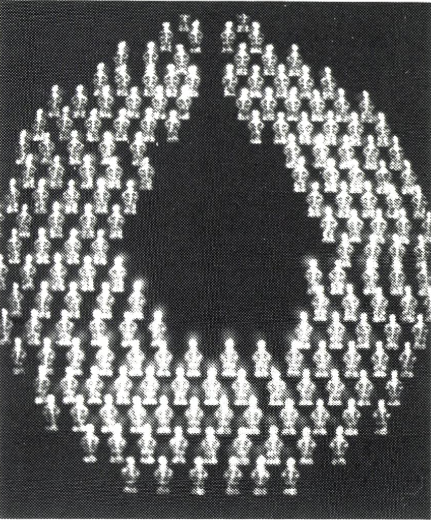
The final cost exceeded initial estimates, which had ranged from NOK 250 to 300 million.[REMOVE]Fotnote: Statoil. (1990, november). Gullfaks – glimt fra historien om et helnorsk oljefelt. Den norske stats oljeselskap a.s. Stavanger. Side 18 og 31. https://www.nb.no/items/4f4ceb82f9be24c64834e1a04a0a7ca1?page=0&searchText=helnorsk One of the highlights of the opening ceremony was the unveiling of 700 oil lamps, all filled with oil from the Gullfaks field, arranged to form the Statoil logo.[REMOVE]Fotnote: Statoil. (1984). Sandsli innviet. Status: internavis for Statoil-ansatte (Nr. 18, s. 5).
One of the factors that made Sandsli a suitable location was its proximity to Bergen Airport at Flesland, which offered daily helicopter flights to the Gullfaks field.[REMOVE]Fotnote: NRK. (1987, 25. mars). “I nervesenteret for Gullfaks og Oseberg”. Reportasje fra Sandsli i Bergen.
Office layout and structure
The main building consisted of four floors. At each end, the corridors split in two, and then split again at the far ends. Most departments related to the Gullfaks administration were placed at opposite ends of the building. This structure meant that distances between departments were relatively long.
Senior management was located in the central section of the fourth floor, shielded from through traffic by large secretarial offices. Department managers were based in their respective departments at the far ends of the building.[REMOVE]
Fotnote: Rolf, Haugen, J., Solheim, J., & Øvale, T. U. (1986). Gullfaks produksjon – en organisasjon i rask vekst (AI-Dok. 4/86). Arbeidspsykologisk Institutt, Arbeidsforskningsinstituttene. Kap. 3.2.1 Lokalitet.
A report from the Institute of Occupational Psychology, commissioned by Statoil’s Gullfaks operations team (February 1986), summed up the layout like this:
The design reinforces the feeling of being in a world of one’s own. For example, when in the HR department, you have no immediate connection to the others. You don’t see them, you don’t hear them, and you don’t have to pass through them to get where you’re going. Each wing is a small island unto itself.[REMOVE]Fotnote: Rolf, Haugen, J., Solheim, J., & Øvale, T. U. (1986). Gullfaks produksjon – en organisasjon i rask vekst (AI-Dok. 4/86). Arbeidspsykologisk Institutt, Arbeidsforskningsinstituttene. Kap. 3.2.1 Lokalitet.
At the same time, the building featured several shared spaces, such as a central canteen and coffee rooms located between the main and side wings. The offices were also described as bright and comfortable, with soothing colors, carpeted floors, and indoor plants.
Growth in Bergen during the 2000s
Statoil was the first to locate its administration in Sandsli, but many others followed. By 2005, more than 200 companies linked to the oil and gas industry had set up shop in Bergen, many of them in the Sandsli area. Norsk Hydro quickly placed the administrative unit for the Oseberg field in Bergen, just a short walk northeast of Statoil. Along with Gullfaks, Oseberg was a major field that helped place Bergen at the heart of industry developments. Over time, Bergen became the Norwegian city with the most Hydro employees.[REMOVE]Fotnote: Steensen, J. A. (2005, 29. november). Norges største oljeby. Teknisk Ukeblad. Hentet fra https://www.tu.no/artikler/norges-storste-oljeby/264060 After the merger of Statoil and Hydro in 2007, several key functions were centralized in Bergen, including the headquarters for technology and renewable energy initiatives. By 2011, nearly 60 percent of Statoil’s fields on the Norwegian continental shelf were operated from Bergen.[REMOVE]Fotnote: Gjerde, K. Ø. (2011). Oljebyer i Norge (s. 20). Hentet fra norskolje.museum.no/3398_426a5f5a6f2a43d2ad6fde43ec5814c4.pdf
On the move
Around the time of the Statoil–Hydro merger, a bridge was built between the two office buildings—a symbolic link between the two companies coming together. Today, however, there are few Equinor employees to be seen on that bridge. In 2011, a few years after the merger, Statoil sold its original office building (Sandslihaugen 30) to DNB Scandinavian Property Fund..[REMOVE]Fotnote: DNB Næringseiendom. (2020, 7. januar). Vestland Fylkeskommune har flyttet til Sandslihaugen 30. Leietaker DNB. Hentet (januar 2025) fra https://leietakerdnb.no/vestland-fylkeskommune-har-flyttet-til-sandslihaugen-30/
After a five-year lease period, Statoil relocated to the former Hydro offices, which had been expanded and modernized.
Once Statoil vacated the premises, the original building was leased to Vestland County Council, which needed temporary offices following the regional merger between Hordaland and Sogn og Fjordane. In 2023, the building was sold to Selvaag Bolig ASA, which is working to redevelop the area for residential use.[REMOVE]Fotnote: Saltnes, D.-J. (2023, 23. mars). Selvaag Bolig kjøpte Sandslihaugen 30. Estate Vest. https://www.estatevest.no/selvaag-bolig-kjopte-sandslihaugen-30/As of 2025, parts of the building are also in use as an international school.
Construction begins in dry dockFrom Statoil to the State