Should the Condeep Giants Join UNESCO’s World Heritage List?

Over the last just‑over 20 years, the question of platforms on the Norwegian continental shelf and their potential World Heritage status has surfaced in
public debate several times. Through three phases, this article shows how
public attention—and the broader preservation effort around installations—has
evolved over these years. Above all, it’s worth noting that it wasn’t until April and May 2022 that things really gathered pace.
Phase One: Marstein’s proposal
Already in 2001, the idea of protecting entire platforms was raised by the
then Director General of the Norwegian Directorate for Cultural Heritage
(Riksantikvaren), Nils Marstein: “It will cost a fortune to remove the
platforms. Perhaps we could put some of that money into a fund to preserve
them instead. Perhaps we might be bold enough to imagine alternative uses for
the platforms in the future.”
Marstein did not rule out that an offshore platform could make it onto
UNESCO’s World Heritage List.[REMOVE]Fotnote: Askeland, Ole J. (2001, 11 May) – Hvorfor ikke frede en plattform? Stavanger Aftenblad, p. 2. The Secretary‑General of the Norwegian National Commission for UNESCO called the proposal “very interesting.”[REMOVE]Fotnote: Vågå, Finn E. (2001, 11 May). Interessant for Unesco. Stavanger Aftenblad, p. 2.
The initiative was not followed up, however.
Phase Two: The heritage plan and the industrial heritage projects
In the years that followed, the topic went quiet. Nevertheless, substantial
work went into laying a foundation for a more informed debate about why
installations in general—and Condeep constructions in particular—were worth
preserving. The work had two main strands:
1) Many central actors in the Norwegian petroleum industry helped prepare a
heritage plan (2012) for installations on the Norwegian continental shelf.
The project was led by the Norwegian Petroleum Museum.[REMOVE]Fotnote: Tønnesen, Harald and Hadland, Gunleiv 2012. Olje- og gassfelt i Norge. Kulturminneplan (2nd ed.). Norsk Oljemuseum.
https://www.norskolje.museum.no/forside/kunnskap/publikasjoner/olje-og-gassfelt-i-norge-kulturminneplan/ The publication assessed which installations were most worthy of documentation. Gullfaks received the highest priority level, together with 15 other fields/areas.
The placement was justified by:
A) Technology
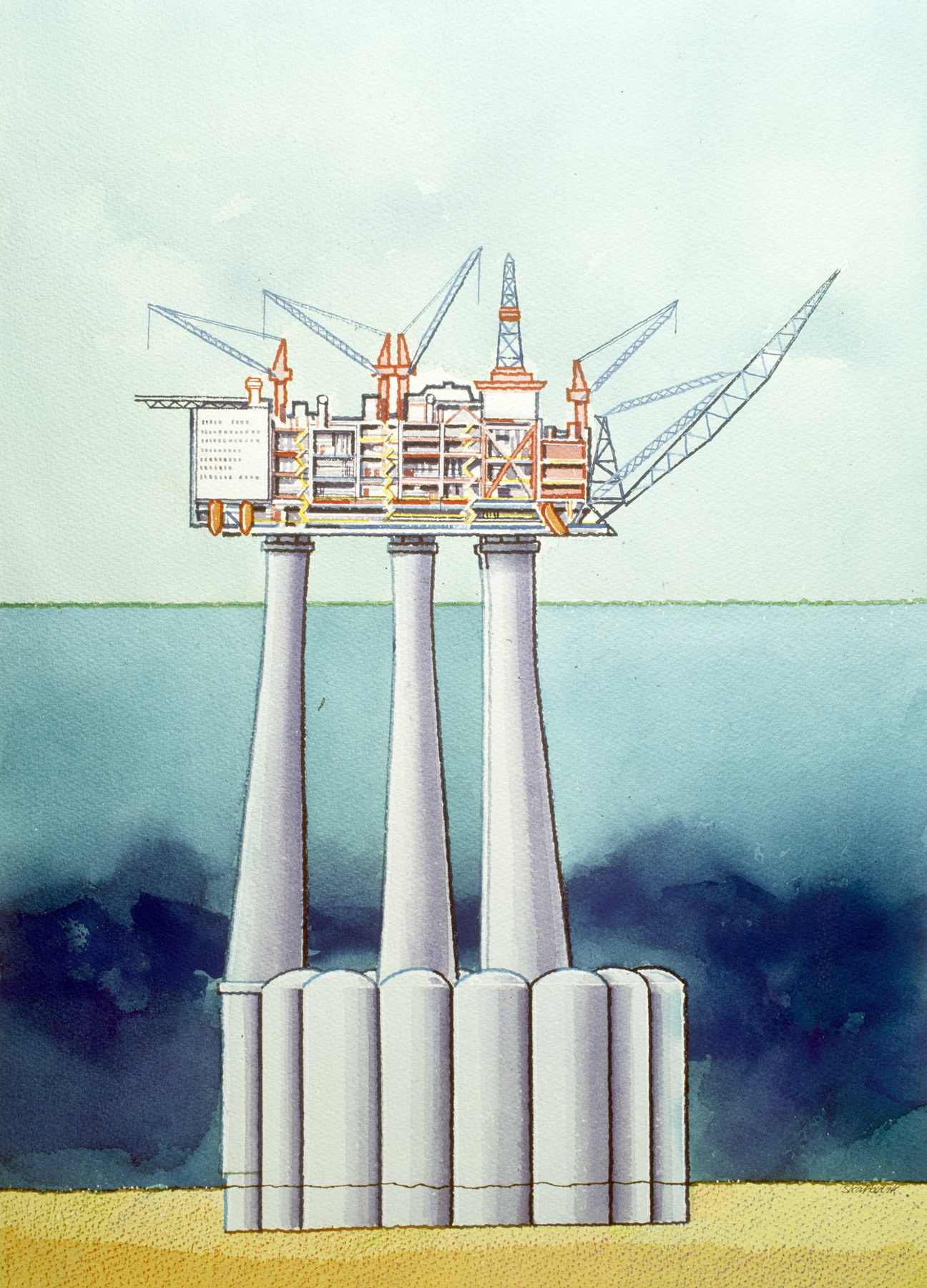
The three Gullfaks platforms represent a continuation and further
development of the Condeep concept from Statfjord. Statfjord and Gullfaks
are the only fields with three Condeep platforms each, making them a
focal point of the Condeep era. Gullfaks C is also the heaviest structure
ever moved by humans.
B) Norwegian identity
The field was pioneering in putting the “all‑Norwegian” approach into
practice: “Gullfaks was the first major field where Statoil [now Equinor]
or another Norwegian company held the operatorship from the very start of
development. In this way, Gullfaks was important for the build‑up of
Statoil as an operating oil company, drawing on experience from Statfjord.”[REMOVE]Fotnote: Ibid., p. 165.
All licensees were Norwegian: Statoil 85%, Norsk Hydro 9% and Saga
Petroleum 6%.
Gullfaks also played a key role in establishing a Norwegian offshore
vocabulary. Central to this effort was developing a glossary of key terms.
All these elements added cultural value: national pride in delivering such
a large project on our own two feet—literally—and in doing so using
Norwegian as the working language.
C) Economy
As one of Norway’s largest oil fields, it has been economically
significant, with reserves roughly comparable to the Johan Sverdrup field.
——————
2) For the second strand, the last just‑over 20 years have also seen a large,
near‑continuous effort to document the most important fields (partly based on
the heritage plan’s recommendations). To date, industrial heritage projects on
Ekofisk, Frigg, Statfjord, Valhall and Draugen have been completed, and a
documentation project on Gullfaks is underway (2025).[REMOVE]Fotnote: See the various industrial heritage projects at industriminne.no. For condeep and world heritage, see also Sandberg, Finn Harald, “Condeeps. The dinosaurs of the north sea”, Journal of Energy History/Revue d’Histoire de l’Énergie [Online], no. 2, published 03 June 2019, https://www.energyhistory.eu/en/energy-sources-news-archives-and-heritage/condeeps-dinosaurs-north-sea
Phase Three: The municipality and the museum take a joint initiative
More than 20 years after Marstein’s intervention, a solid basis had been laid
for renewed public focus on the preservation value of the concrete structures.
In April and May 2022, Stavanger Aftenblad ran several pieces on the status of
the Condeep structures and the possibility of World Heritage listing.[REMOVE]Fotnote: See, for example, Knutsen, Kjell Arne (2022, 7 April). Stavanger vil ha betongplattformer på verdensarvlisten. Stavanger Aftenblad, pp. 40–41, and Lindberg, Björn (2022, 7 April). Condeep-ene – en verdensarv. Stavanger Aftenblad, p. 37. See also NRK Rogaland: Espeland, A. J. and Kalstad, L. M. (2022, 13 May). Mener norske plattformer er like unike som Frihetsgudinnen og Den kinesiske mur. https://www.nrk.no/rogaland/mener-condeep-plattformene-i-nordsjoen-horer-hjemme-pa-unescos-verdensarvliste-1.15964684 In an editorial, the paper supported the idea and dubbed the Condeep structures “the Norwegian pyramids.”[REMOVE]Fotnote: De norske pyramidene (Editorial, 2022, 9 April), Stavanger Aftenblad, p. 4.
In spring 2022, the topic also moved firmly into Stavanger’s political process.
Following an initiative by Geir Støle (Labour) to consider placing Condeep
structures on UNESCO’s World Heritage List, the matter came before the city’s
executive committee in May 2022. The administration recommended that the
municipality and the Norwegian Petroleum Museum send a request to the Ministry
of Climate and Environment to consider seeking World Heritage listing for
Condeep structures. Debate in the executive committee focused mainly on whether the cost implications of such status were sufficiently clarified before sending such a request. In the end, a large majority voted to submit it.[REMOVE]Fotnote: Jupskås, Stein Halvor (2022, 13 May). Stavanger går videre med Condeep som verdensarv. Stavanger Aftenblad, p. 10. The letter stressed the following:[REMOVE]Fotnote: NB. Is the letter public?
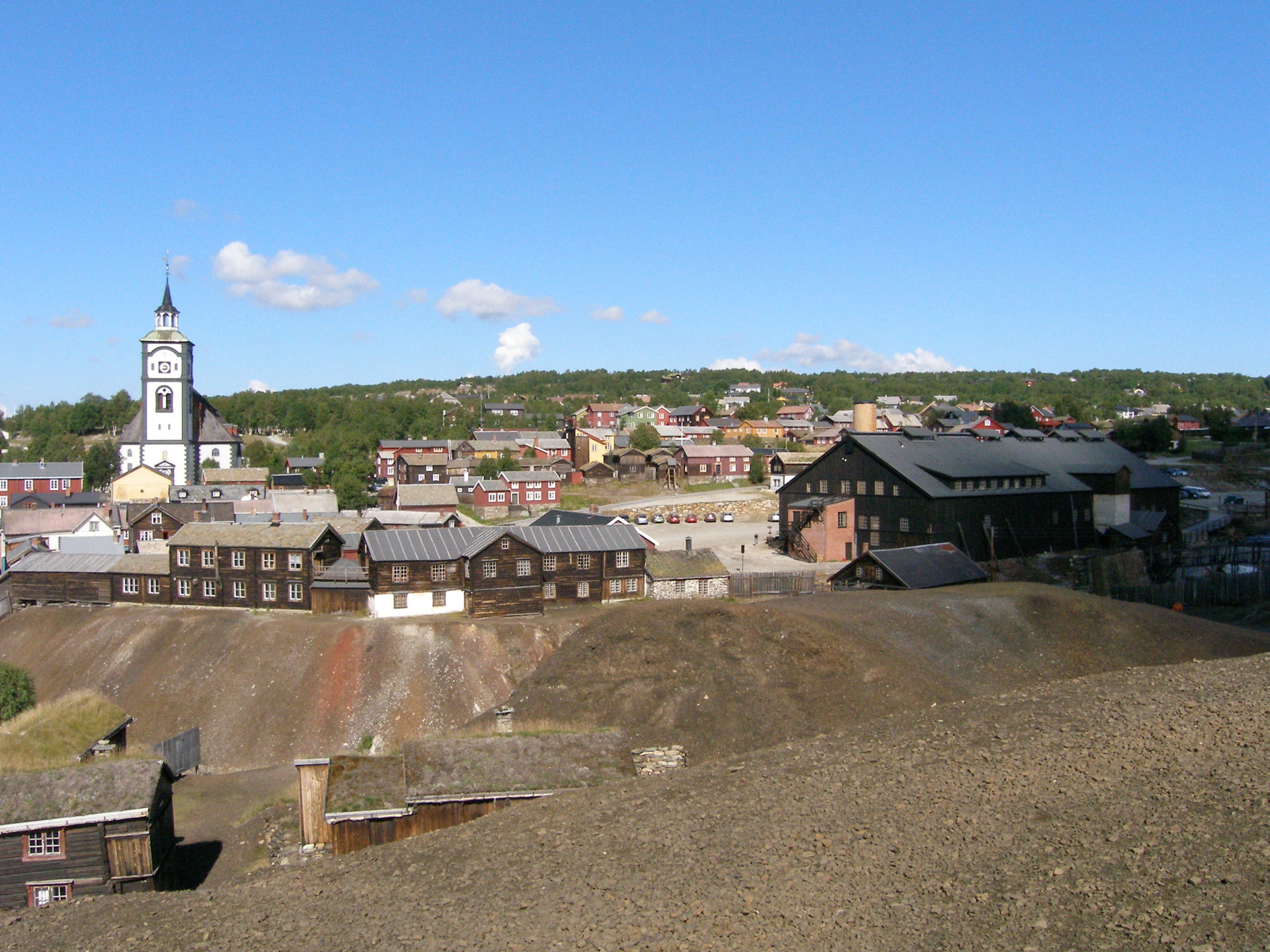
“Condeep is a central element of modern Norwegian industrial history and can go
a long way toward complementing the older industrial history already
represented on UNESCO’s World Heritage List—namely, the mining at Røros and
the industrial heritage/water‑power system in the Rjukan–Notodden area.
Although two of Norway’s eight World Heritage Sites fall under the industrial
heritage category, this category is underrepresented on UNESCO’s list, and the
oil industry is not represented at all.
Petroleum activity is contested. But that only increases its historical
preservation value, as well as the importance of understanding what drove a
marginal industrial nation to build, among other feats, the world’s tallest
(Troll A) and heaviest (Gullfaks C) moveable concrete structures, set them on
the seabed, and deliver enormous quantities of energy. Nothing similar will
ever happen again.
Condeep also has significance far beyond national borders. In Europe’s energy
history, the Condeep platforms can stand as a symbol of reliable energy
supplies—Norway has in recent years covered between 20 and 25 percent of total
gas consumption in the EU and the United Kingdom.”
Subsequently, there has also been discussion between the Directorate for
Cultural Heritage and the Norwegian Petroleum Museum regarding the value of
inscribing Condeep structures on the World Heritage List. Director General
Hanna Geiran argued that partial decommissioning of the installations (removal
of the topsides) would make them less suitable for a place on the World
Heritage List. She also pointed out that the sites are extremely inaccessible
to the public.
The Norwegian Petroleum Museum disagreed that the absence of the topsides would affect preservation value. The museum emphasized that limited accessibility does not rule out World Heritage status, as many current World Heritage sites are, in practice, inaccessible to the public. Examples include Inaccessible Island and Surtséy.[REMOVE]Fotnote: Knutsen, Kjell Arne (2023, 4 February). Vil ikke ha plattformer på eksklusiv liste. Stavanger Aftenblad, p. 54. Among hardly accessible World Heritage Sites, Inaccessible Island and Surtséy are mentioned.
Threading a Condeep through the eye of a needle
The request from the municipality and the Norwegian Petroleum Museum remains under consideration at the ministry (as of Dec. 2025).
For now, it remains to be seen whether it will be possible to guide, for
example, the 1.5‑million‑tonne Gullfaks C substructure through the eye of the
needle on the path toward recognition—and thus listing alongside the pyramids
of Egypt, the mining at Røros and the industrial systems in Rjukan and
Notodden.