
Saved by the B deck?

In the period leading up to the Gullfaks B deck contract award, Moss Rosenberg Verft (MRV) had missed out on several major opportunities. The deck for Gullfaks A had gone to Aker Stord, and in February 1985, a NOK 300 million contract for hookup work on the three Ula platforms was awarded to Haugesund Mekaniske Verksted. The NOK 160 million contract MRV secured in September 1984 for outfitting the shafts of Gullfaks B was not enough to maintain staffing levels beyond spring 1985.[REMOVE]Fotnote: Olsen. M. (04.09.1984) Gullfaks B til MRV. Stavanger Aftenblad MRV consistently submitted higher bids than its competitors and had done so for quite some time.[REMOVE]Fotnote: Steen-Johnsen. I. (27.02.1985) Bitter pille for Rosenberg. Stavanger Aftenblad side 8.
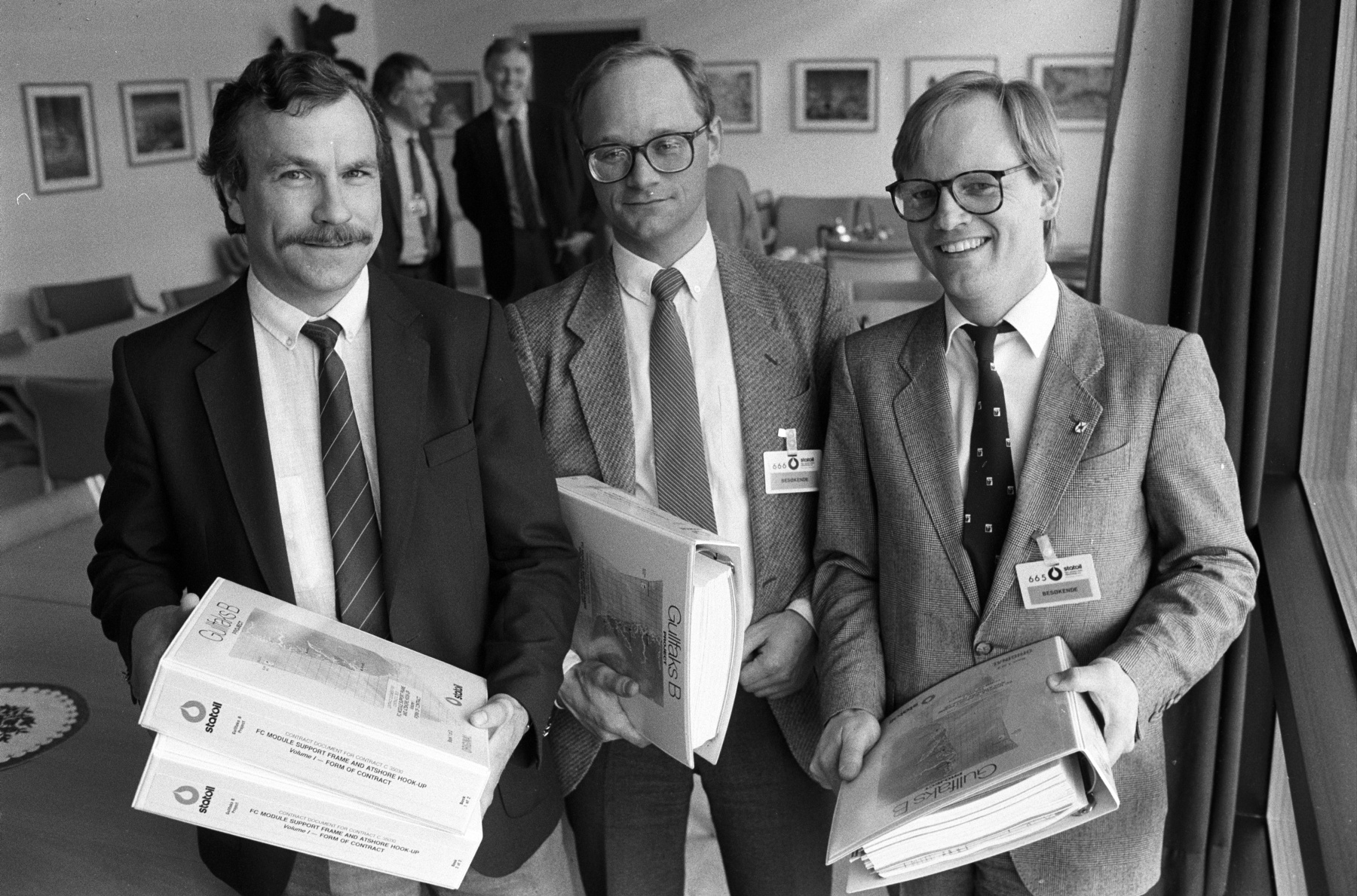
On April 15, 1985, a short-term rescue arrived when the yard signed a contract with Statoil to build the deck for Gullfaks B.[REMOVE]Fotnote: Status: internavis for Statoil-ansatte. 1985 Nr. 4 s. 15 This contract allowed MRV to retract many of the layoff notices it had issued just months earlier.[REMOVE]Fotnote: Sletten. S (16.04.1985) Antall permitterte betydelig redusert. Stavanger Aftenblad. s. 8 However, not all workers were reinstated. The contract was part of a restructuring effort aimed at regaining lost market share and improving competitiveness. Employee retraining, reskilling, and organizational changes were intended to create a more versatile workforce while shifting MRV’s focus toward offshore-related projects.
A Temporary Reprieve
The Gullfaks B contracts provided a much-needed buffer for MRV’s reorganization. Combined, the shaft outfitting and deck construction contracts were worth NOK 1.2 billion in 1984 currency.[REMOVE]Fotnote: NOK 160 million for shaft outfitting and a little over NOK 1 billion for deck construction This eased the pressure to continuously secure new large-scale contracts, at least for a while.[REMOVE]Fotnote: Nerheim. G, Jøssang. L.G, Utne. B.S.(1995) I Vekst og forandring. Rosenberg Verft 100 år 1896-1996. Kværner. S. 417 After winning the Gullfaks B deck contract, MRV even withdrew from the competition for building the Oseberg A deck.[REMOVE]Fotnote: Steen-Johansen. I. (30.05.1985) Håpet brast for Haugesund Mek. Stavanger Aftenblad side 6
Protests Over Continued Layoffs
However, securing the B deck contract made it harder to justify continued layoffs at the ground level.
In the same month MRV was awarded the contract, the workers’ union organized two protests, during which employees left work during their shifts. The protests were a response to MRV’s decision not to reinstate seven workers, despite the company’s growing order book and expectations of high activity in the coming months.
A Familiar Pattern
MRV’s situation in the mid-1980s was, in many ways, representative of the challenges faced by major platform builders. Despite efforts to divide contracts into smaller modules, they remained enormous in scale. A single contract could shift a yard from mass layoffs to a labor shortage almost overnight.
Each major project lasted one to two years before the company once again found itself in urgent need of securing another large contract.
Modules for Gullfaks AGullfaks C approved by the Storting