
Quality Assurance Award to Gullfaks A

The foundation for this success was laid as early as 1981, when a project model was developed for the execution of the upcoming Gullfaks developments.
At the time, Statoil had limited personnel resources and, like Mobil on Statfjord, chose to engage a main consultant to work in close integration with the company’s own staff. This meant that each leader in Statoil’s project organization had a direct counterpart at the consulting firm, while final decision-making authority remained with Statoil’s management team. Task distribution was clarified jointly, based on experience and expertise, and job descriptions were created for all positions in the joint organization.
At the same time, important work began to establish procedures and guidelines for project execution and operations. Olav Lappegård, who was hired by Statoil, was given responsibility for this procedural project, which was carried out in collaboration with Bechtel. Lappegård later became Deputy Project Director for Gullfaks A. Bechtel personnel were located on the same floor as the feasibility project at Forus East, which led to close collaboration and joint development of methodologies across disciplines.
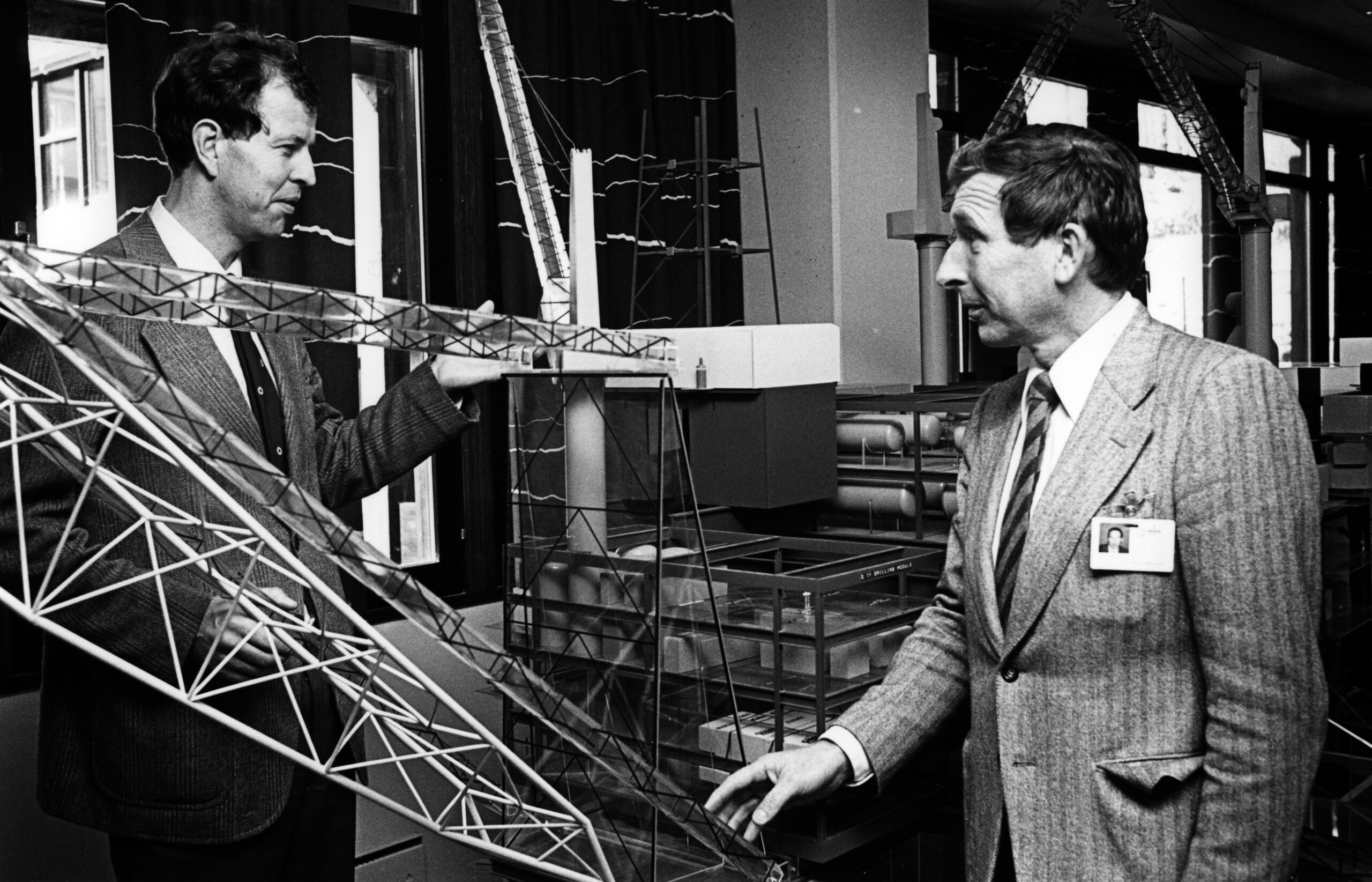
In parallel, the Project Services Department (PRT) launched an initiative called ECPAM – Engineering, Construction, Procurement Activity Model – intended as a planning tool for offshore projects. The consultant assisting Statoil was a retired vice president from Exxon with extensive experience from similar projects. The ECPAM model became a key tool in planning both Gullfaks A and B.
In 1981, the Norwegian Petroleum Directorate also introduced new guidelines for internal control, requiring licensees to implement robust systems and practices. This led the project to develop and implement new procedures and follow-up methods. Discussions around these new requirements and the Norwegian Standard 5801 had a significant impact on the project’s work and its collaboration with the supplier industry.
That same year, the Gullfaks A project established close cooperation with the mechanical workshop industry through MVL (Federation of Mechanical Workshops). In the years that followed, a series of seminars were held where the project was presented in detail, and training in the new quality requirements – closely coordinated with the Petroleum Directorate – was a central focus.
When Gullfaks A received the Quality Assurance Prize in 1984, the jury emphasized that the project’s direct influence on the supplier industry – even beyond the workshop sector – had been crucial in promoting the understanding of quality assurance in Norway. Gullfaks A had defined goals and practices that would serve as guiding principles for future projects in the petroleum industry.
The article is based om Helge Hatlestad. (2021). Femti år med oljeproduksjon. Min historie. [Helge Hatlestad]
The A-deck for Aker GroupGullpipe plan abandoned