
Oil lingo – a language you almost understand

“Have you seen the WP for the work planned on the BOP?”
“No, I haven’t seen the JSA either, but I think they were going to bring it up at the five o’clock meeting. It’s possible there was a bit more to ‘investigere’ before they could settle on a plan. I think there was a discussion about which PPE would be required. Maybe check with the CSR; she’s in with the Catering & Administration lead right now?”
“Not with the OIM? That’s what they said on the radio. Something about the MOB boat. Something wasn’t in order.”
“I just saw her with the C&A lead, at least. Maybe she’d finished with the OIM?”
This staged exchange is meant to illustrate some of the challenges newcomers face when trying to communicate with – and understand – people in the oil industry (offshore or not).
Right over our heads
At the end of June 2024, three of us working on the Industrial heritage Gullfaks project visited Gullfaks A. At 17:00 on day two we joined the daily SBP meeting (speaking of abbreviations), the Coordinated Drilling and Production meeting.
Among other things, it covered ongoing jobs around the platform and confirmed that no planned work would conflict with other operations in ways that could create a safety risk.
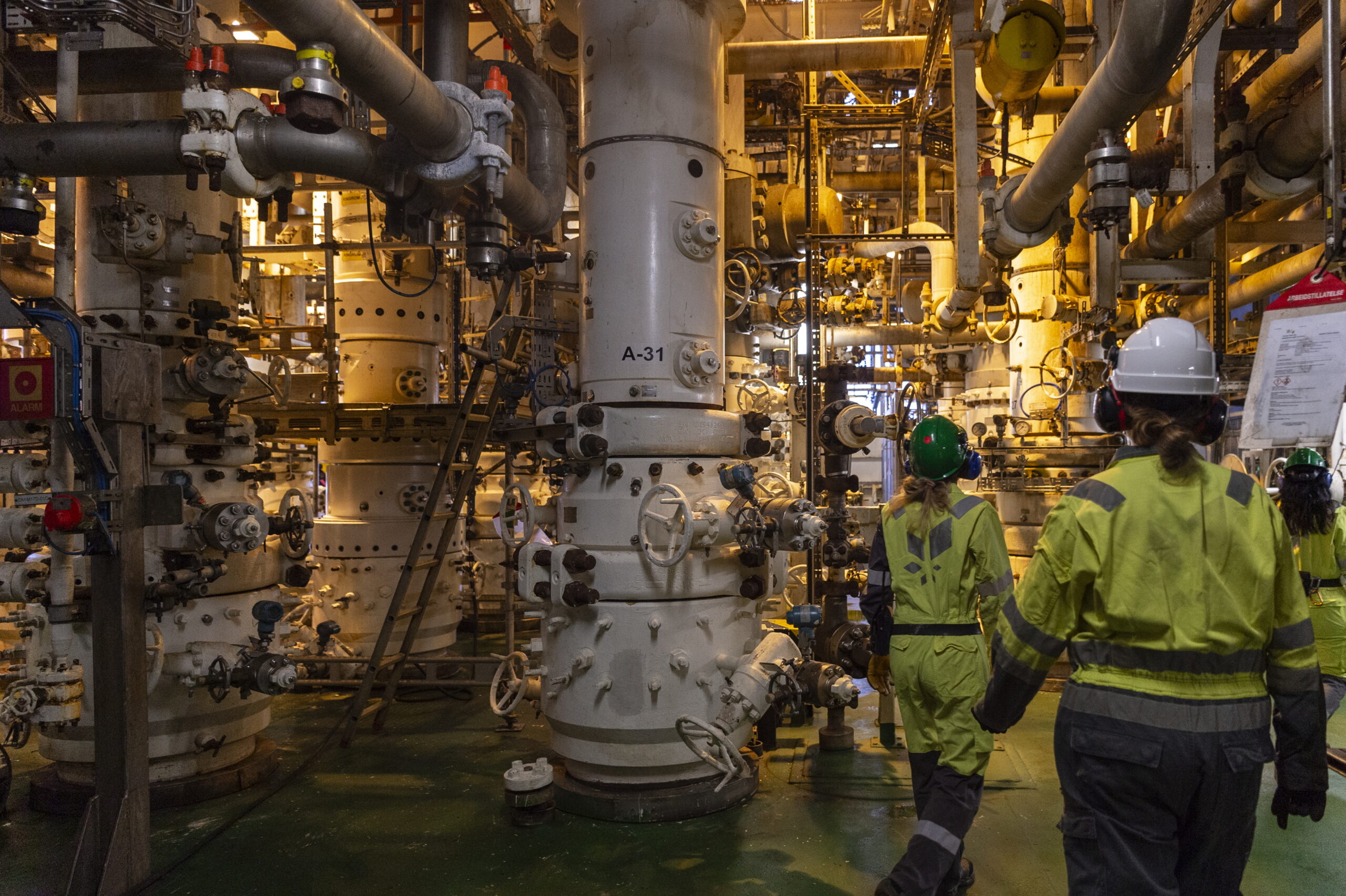
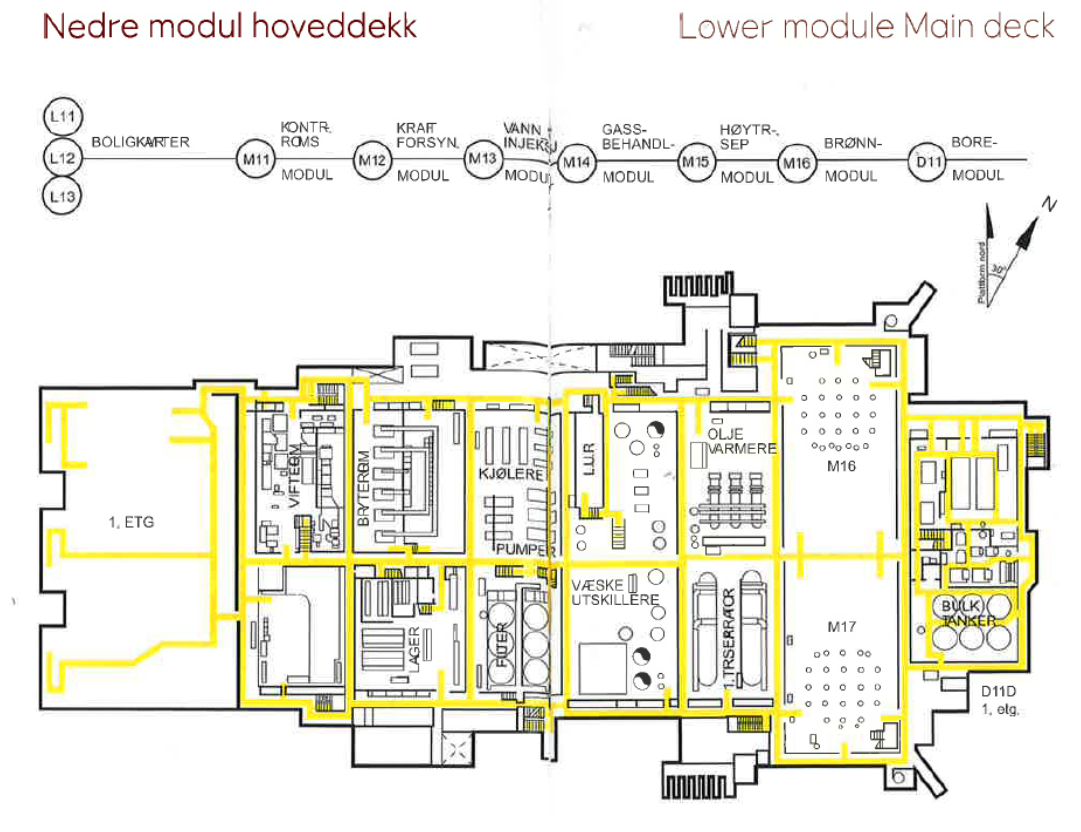
Different platform-area charts were displayed on screens around the room. Area tags and other abbreviations came thick and fast, and although some were familiar to us three museum employees, most of it flew straight over our heads.
It’s a bit like listening to a language you think you know, then realizing you’re not nearly as fluent as you thought.
So, what’s behind the oil lingo?
Efficiency and safety
Having a specialized jargon or lingo, isn’t unique to the oil industry, or to working life at all.
Many abbreviations likely started on paper to avoid writing out long phrases every time, especially if a wording had to be repeated over and over.
Some of those abbreviations then made their way into spoken language – like “ISP,” which rolls off the tongue more easily than “insulation, scaffolding and painting.”
Short forms are also handy when you’re talking over radio or in noisy environments.
Back to the SBP meeting: area abbreviations are a precise and efficient way to convey exactly where different tasks are to be carried out.
In a crisis, fast, abbreviation-heavy communication can be essential for mobilizing the measures needed to avert a potentially catastrophic situation.
How effective that communication is, of course, depends on everyone speaking the same language – or the same lingo or jargon.
For an oil worker, it probably takes a bit of time before the oil lingo really sticks, but one day – maybe around the same time you manage to get from A to B without getting lost (we museum folks always had an escort out in the plant, thankfully). A bona fide oil worker will also have been introduced to some of the expressions before they even set foot on a platform.
For the curious
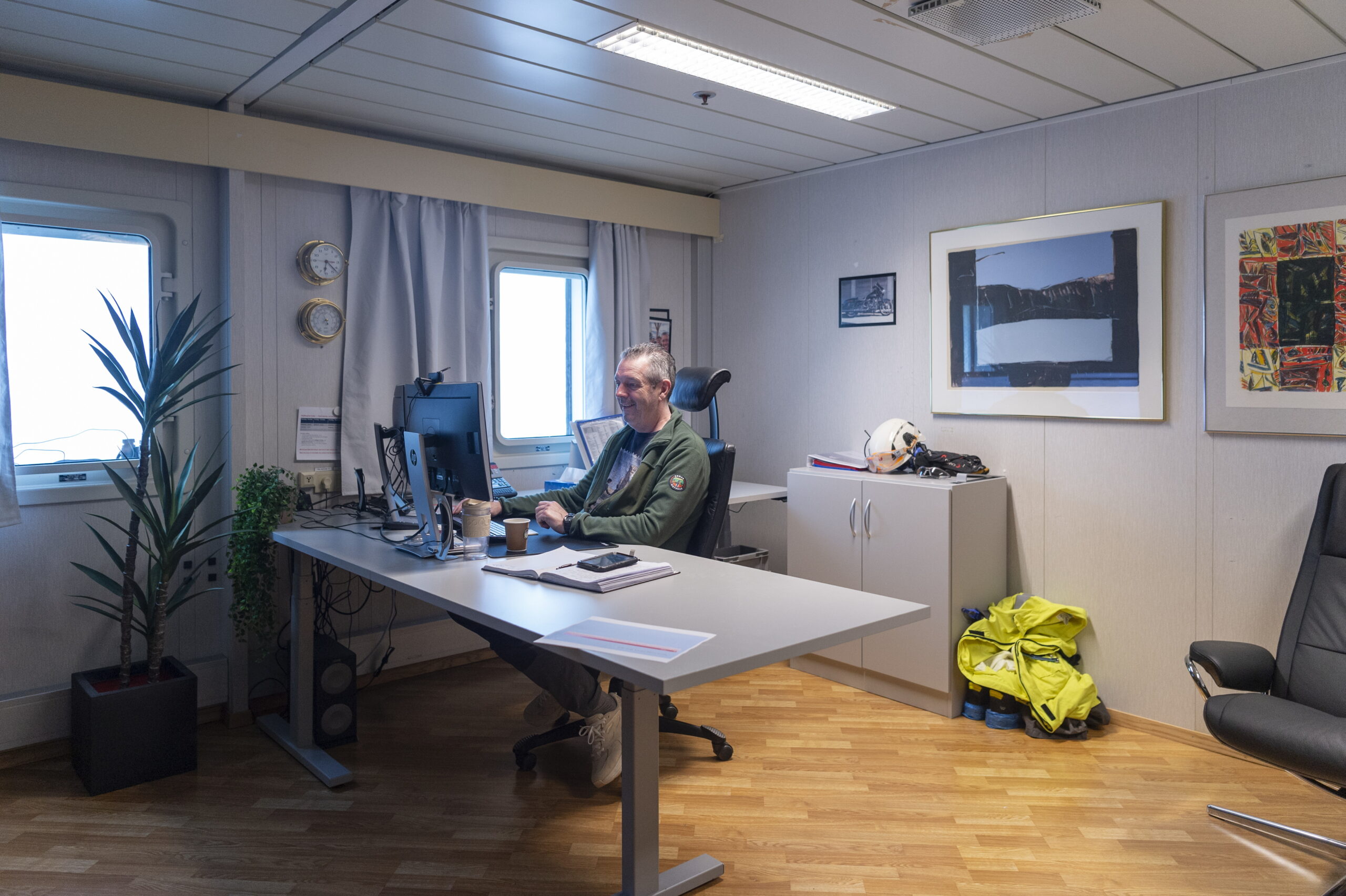
I don’t necessarily think the average oil worker would find my staged dialogue particularly realistic, but they might not even notice the abbreviations. Luckily, we eventually caught on to some of them. Feel free to tuck these behind your ear in case you ever want to impress an oil worker.
- WP stands for “work permit,” which has to be issued for certain tasks that carry various kinds of risk.
- JSA stands for “job safety analysis.” This is done ahead of a task to identify potential hazards, figure out how to reduce risk, or determine whether there are safer ways to do the job.
- “Investigere” was a word used in a morning meeting—basically a Norwegianized take on the English verb “investigate,” meaning to look into something. Its usage shows how English terms and expressions are woven into the industry, especially in certain parts of it.
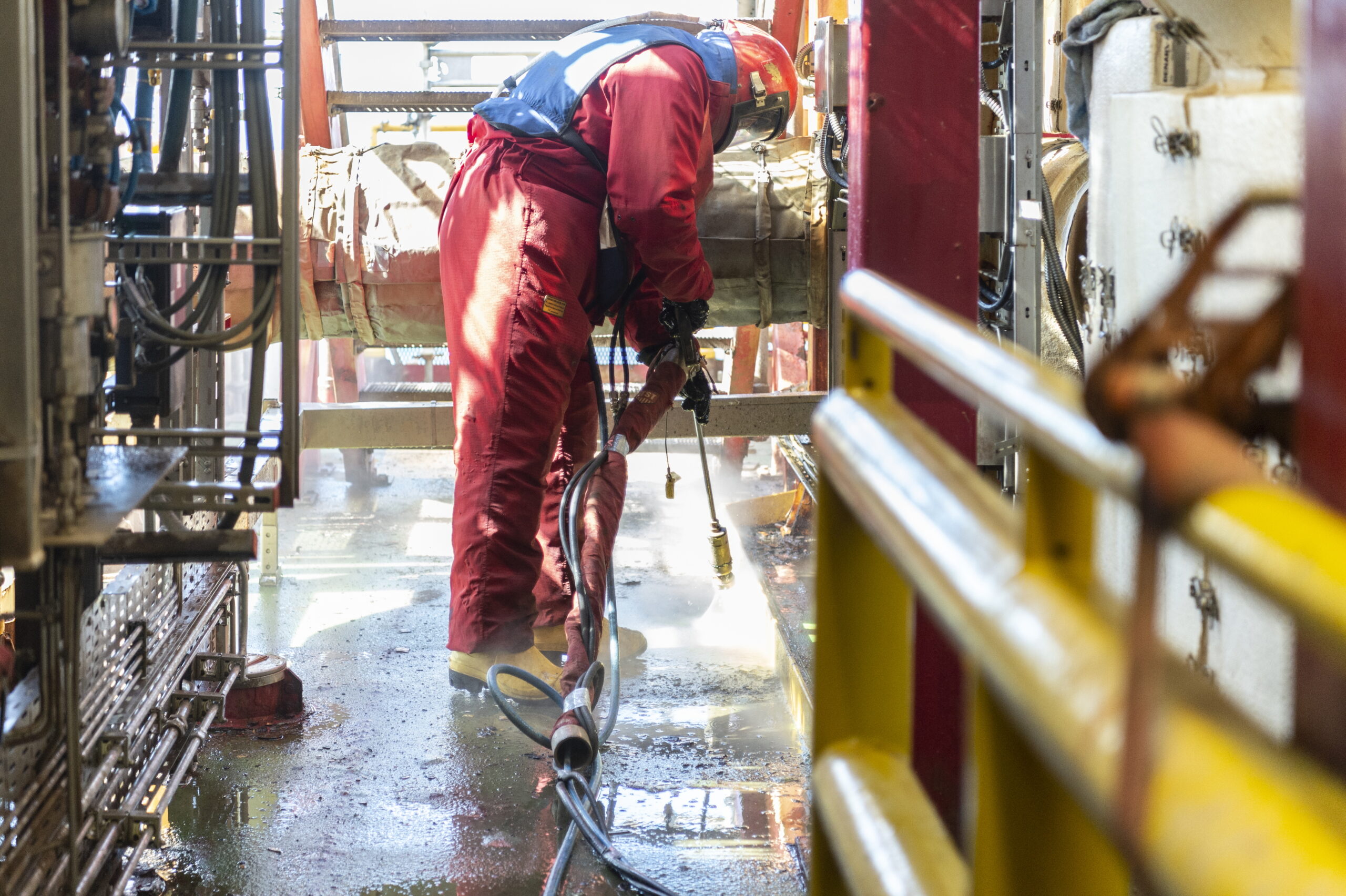
- PPE stands for “personal protective equipment.” Standard PPE is coveralls, hearing protection, safety glasses, gloves, and safety footwear. In addition to the standard kit, you might need, for example, earplugs on top of ear muffs in particularly noisy areas, a different type of over-suit, or a face shield.
- The CSR is the “chief safety representative,” while SR denotes “safety representative.”
- C&A stands for “Catering & Administration,” the manager responsible for those who handle, for example, cleaning, food service, and receiving helicopters offshore.
- The platform manager is called the “Platform Manager” in Norwegian usage; the established English title is OIM, “Offshore Installation Manager.” Each platform has three platform managers, one per rotation.
- A MOB boat is a “man overboard” boat. It can be lowered and used if someone falls overboard.
- SBP stands for “Samordna boring- og produksjosmøte” which is Norwegian for Coordinated Drilling and Production Meeting.
And if the oil worker isn’t impressed – don’t worry. The abbreviations have just become such a natural part of their vocabulary that they don’t even notice them anymore. It may even have gone so far that they forget not everyone communicates with the same short forms.
As you’ve seen, English phrasing and abbreviations are no longer the oddities they were when the field was new. Back then it mattered to underscore that Gullfaks was the first Norwegian oilfield.