Norway’s offshore wind dream

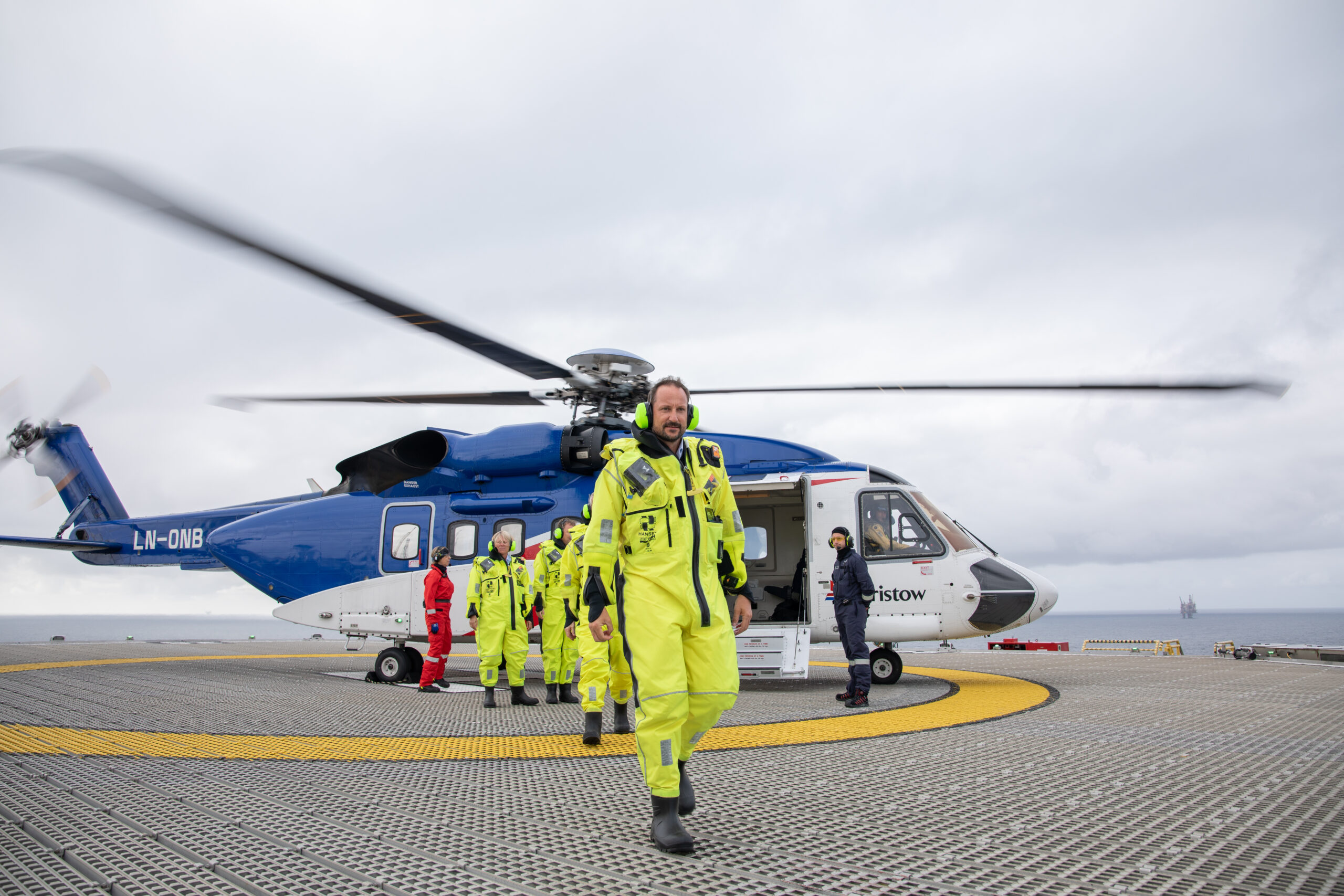
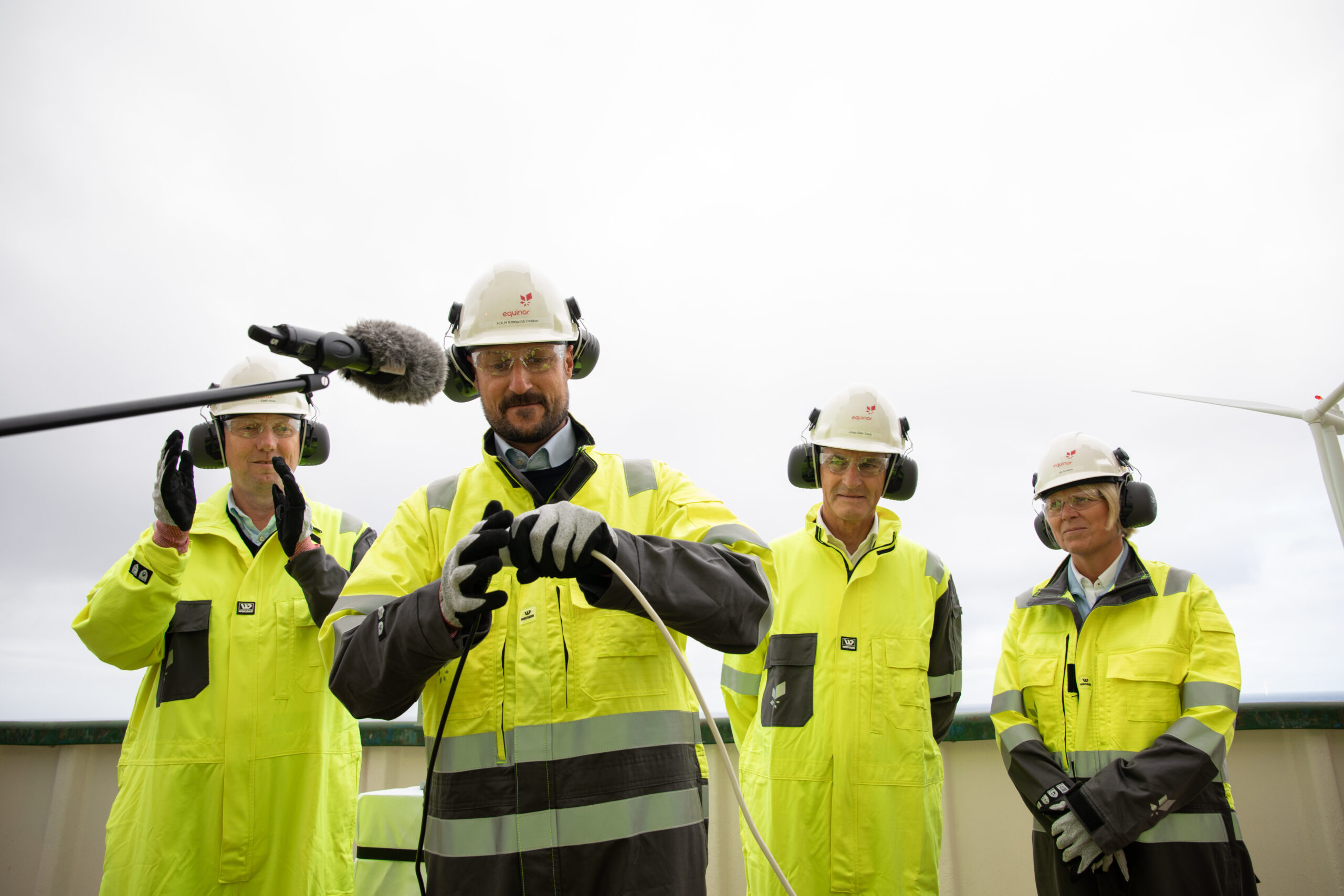
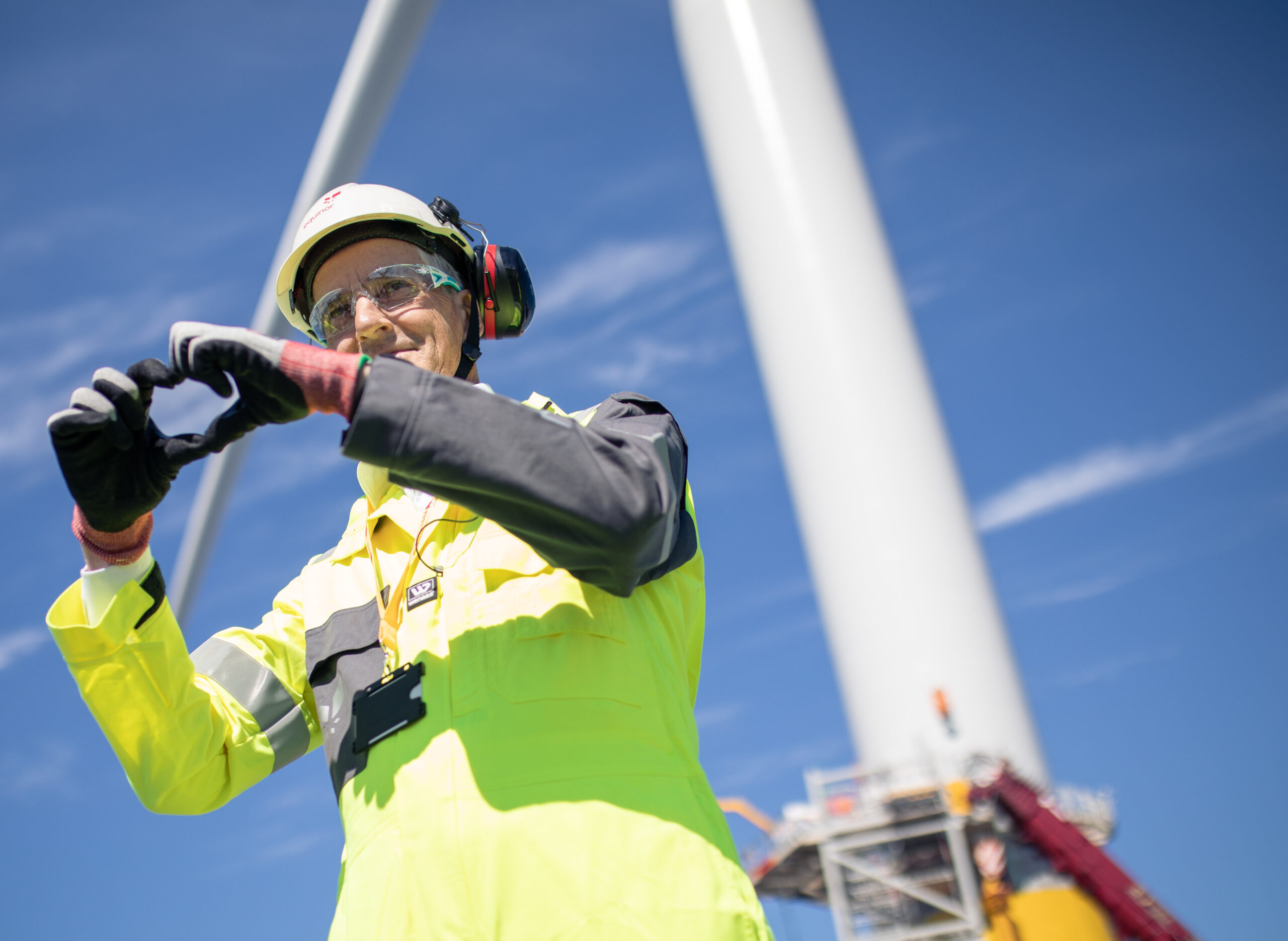
On 23 August 2023, Crown Prince Haakon flipped the switch that connected the Hywind Tampen turbines to Gullfaks C (via Gullfaks A). He was joined by Prime Minister Jonas Gahr Støre, who visited the Tampen area to mark the official opening of the wind farm.[REMOVE]
Fotnote: Christensen, J. (2023, 24. august). Åpnet historisk havvindpark etter kostnadssprekk: – Viktig at vi kommer i gang. Dagens Næringsliv.https://www.dn.no/energi/hywind-tampen-prosjektet/equinor/jonas-gahr-store/apnet-historisk-havvindpark-etter-kostnadssprekk-viktig-at-vi-kommer-i-gang/2-1-1505064
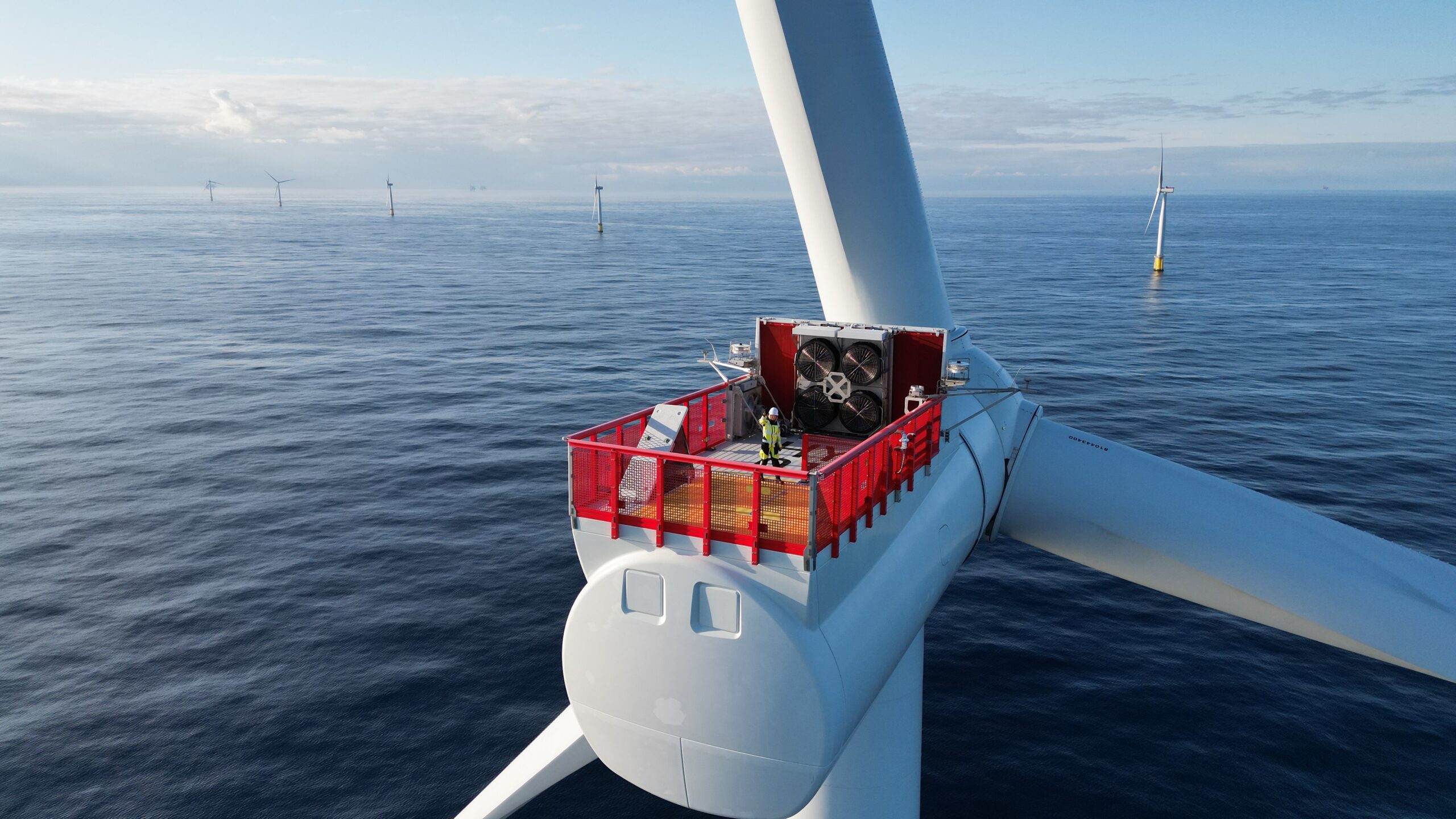
Operated by Equinor, the 11 turbines at Hywind Tampen form the world’s largest floating offshore wind farm and supply electricity to the Gullfaks and Snorre platforms. In addition to its scale, Hywind Tampen is the world’s first floating wind farm to deliver power directly to oil and gas installations. As such, the project’s completion represented a significant political and symbolic step toward positioning Norway as a global offshore wind player. The project also fits neatly into the broader narrative of oil and gas as a springboard for developing new green industries—“taking knowledge from one energy source and using it to develop others,” as the Prime Minister put it in his opening speech.
He also noted that Norway aims to allocate sea areas for 30,000 megawatts of offshore wind by 2030—roughly 340 times Hywind Tampen’s production capacity. The Prime Minister did not address the significant cost overruns at the event but emphasised that state-supported offshore wind projects should help reduce costs over time.[REMOVE]Fotnote: Støre, J. G. (2023, 23. august). Statsministerens tale på åpningen av havvindparken Hywind Tampen. https://www.regjeringen.no/no/aktuelt/statsministerens-tale-pa-apningen-av-havvindparken-hywind-tampen/id2991964/
Political will behind offshore wind
Norway’s offshore wind development would not have moved forward without political support and a willingness to shoulder a large share of the cost. For many years, most political parties have expressed strong support for offshore wind (as of 2024, only the Red Party and the Progress Party remain openly critical). That support has been justified on several grounds.
Competence and technology development: A key argument has been that Norwegian suppliers can gain expertise that positions them to deliver goods and services to the global offshore wind industry. The long-term idea is to profit from exporting this competence, even if building turbines on the Norwegian continental shelf is not profitable today. This applies especially to floating offshore wind, which remains a unique concept in the North Sea as of 2024.
Theoretically, Norwegian subsidies could lead to technological breakthroughs that make floating offshore wind cost-competitive—or at least more affordable. If that happens, it could help other countries reduce their emissions, benefitting the global climate. Norway is not the only country in the world with limited access to shallow waters near shore.[REMOVE]
Fotnote: Hegdal, S. K., & Minge, H. (2024, 7. mars). Viktig å sikre arbeidsplassene innen havvind i energihovedstaden Stavanger. Stavanger Aftenblad. Viktig å sikre arbeidsplassene innen havvind i energihovedstaden Stavanger (aftenbladet.no)
Local jobs and communities: Others have emphasised the potential for offshore wind to ease the transition for workers and communities currently tied to oil and gas. Many specialised offshore communities and supplier industries are expected to face declining investment in petroleum. Offshore wind subsidies may help soften the blow, since much of the expertise built up in oil and gas can also be used in offshore wind. For a supplier company, it matters little whether a project is profitable or not—as long as there’s work to be done.
This perspective was promoted in reports by the think tank Manifest Centre, including Green Industry 21, which brought together climate advocates, trade unions, and supplier companies to develop a roadmap for phasing out oil and gas.[REMOVE]
Fotnote: Manifest Tankesmie. (U.å.). Publikasjoner – Grønn industri. Industri21. Hentet fra https://www.industri21.no/publikasjoner/gronn-industri
Power production: Norway has ambitious electrification goals—covering everything from cars to offshore platforms—and plans to build new energy-intensive industries, such as hydrogen and battery production. As a result, some have warned that Norway could become a net importer of electricity at times—something politicians want to avoid. Onshore wind became increasingly controversial in the late 2010s, which shifted attention to offshore wind.
The government-appointed Energy Commission’s 2023 report, More of Everything – Faster (NOU 2023: 3), concluded that offshore wind was essential if Norway wanted to remain a net energy exporter.[REMOVE]Fotnote: Norges offentlige utredninger. (2023). NOU 2023: 3 Mer av alt – raskere — Energikommisjonens rapport. Kapittel 1.5.4 Vindkraft til havs. NOU 2023: 3 – regjeringen.no The commission’s mandate was to assess future energy needs and recommend how to expand production to ensure a continued surplus.
Reducing domestic emissions: Although emissions from the Norwegian continental shelf are regulated under the EU’s Emissions Trading System (ETS) and not subject to national targets under the Paris Agreement, the Støre government adopted a national target in the 2021 Hurdal Platform: to cut total Norwegian emissions by 50% by 2030. To reach this target while continuing oil and gas production, most offshore installations must be electrified.[REMOVE]Fotnote: Hovland, K. M. (2023, 4. mars). Det grønne skiftet: – Kun idioter tror dette er gratis. E24. Hentet fra Det grønne skiftet: – Kun idioter tror dette er gratis – E24 This target was later rebranded as a “transition goal” and is not legally binding.[REMOVE]Fotnote: Søndeland, G. (2023, 17. november). Frp og SV ber Stavanger-minister rydde opp i Norges sju klimamål: – Ingen stiller spørsmål ved kostnadene eller konsekvensene. Stavanger Aftenblad. https://www.aftenbladet.no/lokalt/i/GM7lgm/frp-og-sv-ber-stavanger-minister-rydde-opp-i-norges-sju-klimamaal-ingen-stiller-spoersmaal-ved-kostnadene-eller-konsekvensene
Legitimising the petroleum sector: A final, less overt argument is that investing in offshore wind enhances the legitimacy of oil and gas. At the Hywind Tampen opening, the Prime Minister said that the offshore wind industry stands “on the shoulders” of oil and gas.[REMOVE]Fotnote: Støre, J. G. (2023, 23. august). Statsministerens tale på åpningen av havvindparken Hywind Tampen.https://www.regjeringen.no/no/aktuelt/statsministerens-tale-pa-apningen-av-havvindparken-hywind-tampen/id2991964/ The implication: without oil and gas, there would be no shoulders to stand on. This idea is not new.
As early as 2008, the tripartite collaboration Konkraft stated that “a strong petroleum sector provides the best foundation for developing a diverse energy cluster with greater emphasis on clean and renewable energy by 2030.”[REMOVE]Fotnote: Boon, M. (2022). En nasjonal kjempe Statoil og Equinor etter 2001. Universitetsforlaget. S. 342. A successful offshore wind industry would demonstrate that transition can happen through continuity—and that the Hurdal Platform’s goal of developing, not dismantling, the oil sector need not block green progress.
The state lends a hand
The Norwegian government has been involved in all offshore wind projects on the shelf, but development has been slower than in other North Sea countries. There are three main reasons for this: Norway lacks areas that are both shallow and close to shore; other governments (in Denmark, the UK, and the Netherlands) have spent more generously; and electricity in Norway is already relatively clean and inexpensive, making offshore wind power less competitive.
Offshore wind subsidies through the years
In 2007, Åslaug Haga—then Minister of Petroleum and Energy in the Stoltenberg government and later head of the Norwegian Wind Energy Association and Renewable Norway—proposed a subsidy of 10 øre per kilowatt-hour for offshore wind.[REMOVE]Fotnote: Stavanger Aftenblad. (2007, 30. oktober).
However, other countries, including the UK, offered much more generous support. According to StatoilHydro’s then head of New Energy, Alexandra Bech Gjørv, the company needed stronger subsidies to proceed. She noted that the UK offered between 50 and 90 øre per kilowatt-hour.[REMOVE]Fotnote: Bøe, A. E. (2007, 7. november). Grønnere StatoilHydro. Stavanger Aftenblad, s. 18. Gjørv argued that the Norwegian state should outdo the British and provide NOK 1 per kWh for power generated by floating offshore wind.[REMOVE]Fotnote: Bøe, A. E. (2008, 23. mai). Flytende havvindmøller – for utflagging? Stavanger Aftenblad, s. 20.
The ambitions were certainly high. In 2008, the state-owned agency Enova estimated that Norway had a technical potential of 14,000 TWh in offshore wind—around 100 times the country’s total hydropower production.[REMOVE]Fotnote: Bøe, A. E. (2008, 17. januar). Havmøllestrøm kan gå til elektrifisering. Stavanger Aftenblad, s. 6. This figure received widespread attention in the media, and the newspaper Stavanger Aftenblad endorsed StatoilHydro’s demand for NOK 1 per kWh in subsidies to realise this potential.[REMOVE]Fotnote: Stavanger Aftenblad. (2008, 3. juli). Hav og Land og tospann. Stavanger Aftenblad, s. 3.
The 2011 national budget allocated NOK 40 million to offshore wind development. But MP Henning Skumsvoll (Progress Party) pointed out that this was only a quarter of what had been spent on the Hywind turbine alone. He doubted that the funding would lead to new projects. Around the same time, the Norwegian Water Resources and Energy Directorate (NVE) published its own estimate, identifying 15 suitable areas and projecting an annual production of 44 TWh—a figure far below Enova’s. Minister of Petroleum and Energy Terje Riis-Johansen also admitted he did not expect commercial offshore wind farms to be built in Norway within the next 10 years—and he was right.
But thanks to generous support mechanisms, the government has now signed a contract for a major offshore wind farm in the Norwegian North Sea. On 20 March 2024, it was announced that the Belgian-Dutch consortium Ventyr would develop the Sørlige Nordsjø II project, with an estimated capacity of 1.5 GW. The state will contribute up to NOK 23 billion and guarantee the company a power price of 115 øre per kWh.[REMOVE]Fotnote: Energidepartementet. (2024, 20. mars). Ventyr SN II AS har vunnet auksjonen om tildeling av prosjektområde for havvind i Sørlige Nordsjø II. Regjeringen.no. Ventyr SN II AS har vunnet auksjonen om tildeling av prosjektområde for havvind i Sørlige Nordsjø II – regjeringen.no
Companies bidding for Sørlige Nordsjø II competed mainly on price—i.e., who could deliver the project with the lowest level of public subsidy. In this way, the project differs from Hywind by being more focused on electricity production and less on technology development.[REMOVE]Fotnote: Øvrebekk, H. (2024, 20. mars). Dette kan bli dyrt. Stavanger Aftenblad. Dette kan bli dyrt (aftenbladet.no) Sørlige Nordsjø II is expected to be operational by the summer of 2031.[REMOVE]Fotnote: Messel Larsen, J. (2024, 16. april) Europower. Hentet fra https://www.europower.no/havvind/dette-er-tidslinjen-for-sorlige-nordsjo-ii-ma-vare-i-drift-senest-sommeren-2031/2-1-1625413