
National and international frameworks for the fate of the concrete substructures on Gullfaks

Applications for approvals in the planning and construction phases of
installations on the Norwegian continental shelf (NCS) can go through extensive
rounds with public authorities. Many considerations also underpin the disposal
(that is, removal, onward transport and dismantling/scrapping) of the same
installations at end of life, a process grounded in both national law and
international conventions.
National legislation
Well before a facility is permanently shut down, the licensees must submit a
decommissioning plan giving the Ministry of Energy a thorough account of the
overall process. Pursuant to the Petroleum Act, that plan forms an important
basis for the ministry’s decision on whether, and if so how, disposal is to be
carried out.[REMOVE]Fotnote: For information on decommissioning plans, see for example:
norskpetroleum.no: “Decommissioning and Disposal.”
https://www.norskpetroleum.no/utbygging-og-drift/avslutning-og-disponering/
Unlike smaller installations such as topsides, subsea facilities and floating
installations, the removal of bottom‑fixed installations must be decided by the
Storting (the Norwegian Parliament). It is therefore clear that the fate of the
Gullfaks platforms’ concrete substructures will be subject to a relatively
comprehensive political process.
International conventions
In addition to national rules, the OSPAR Convention is particularly important
for the international regulation of how installations on the Norwegian
continental shelf are to be handled once they are no longer in operation.[REMOVE]Fotnote: Meling, John, Hausmann Rikke Ellingsen and Faulds, Eric (2018).
“Markedsrapport knyttet til avslutning og disponering/Avslutning og disponering av utrangerte innretninger”, project no. 12635-01,
document no. 12635-01-OO-R-001 (Dr.techn. Olav Olsen AS).
(The report was written for the then Norwegian Petroleum Directorate,
now the Norwegian Offshore Directorate.) https://kudos.dfo.no/documents/12201/files/12330.pdf (pp. 53 and 55.) Also published at: https://www.sodir.no/aktuelt/publikasjoner/rapporter/eldre-rapporter/
markedsrapport-knyttet-til-avslutning-og-disponering2/8-beskrivelse-
fjerning-av-bunnfaste-plattformunderstell/ (8.1 and 8.1.2)
The OSPAR Convention—short for the Convention for the Protection of the Marine Environment of the North‑East Atlantic—entered into force in 1998. Through this agreement, 15 countries have committed to follow certain guidelines to safeguard the marine environment in this region.

The agreement is far from all‑encompassing for maritime activity—shipping and
fisheries, for example, are excluded. What matters here, however, is that the
agreement states as a general rule that petroleum installations are to be
removed after they are taken out of service.[REMOVE]Fotnote: For OSPAR, see: https://www.ospar.org/
The countries that have joined the convention, in addition to Norway, are:
Belgium, Denmark, Finland, France, Germany, Iceland, Ireland,
Luxembourg, the Netherlands, Norway, Portugal, Spain, Sweden, Switzerland,
and the United Kingdom (as well as the European Union).
Before Norwegian authorities decide
on disposal solutions for larger installations, they are, as a rule, to consult
with other countries that are parties to the OSPAR Convention.[REMOVE]Fotnote: Meling, John; Hausmann, Rikke Ellingsen and Faulds, Eric (2018).”Markedsrapport knyttet til avslutning og disponering/Avslutning og disponering av utrangerte innretninger”, project no. 12635-01, document no. 165-01-OO-R-001 (Dr.Techn. Olav Olsen AS) (The report was commissioned by the former Norwegian Petroleum Directorate, now the Norwegian Offshore Directorate.) https://kudos.dfo.no/documents/12201/files/12330.pdf (Appendix D, p. 153). Also published at: https://www.sodir.no/aktuelt/publikasjoner/rapporter/eldre-rapporter/
markedsrapport-knyttet-til-avslutning-og-disponering2/8-beskrivelse-
fjerning-av-bunnfaste-plattformunderstell/ (Appendix D) Norwegian authorities are also bound by the UN Convention on the Law of the Sea
(UNCLOS), which likewise states that such installations should not be abandoned
without good reason, and that if they are, it must be done under certain
guidelines.
Before and after 1978
But how are these rules followed in practice?
The largest field on the Norwegian shelf where a disposal process has been
completed is the Frigg field. That work took place from 2005 to 2010. In
addition, the Ekofisk field has seen systematic removal of many installations
over a number of years.[REMOVE]Fotnote: AF Decom Offshore (2011). “Study of Technical Challenges Related to Transport, Reception, and Disposal of Concrete Installations Onshore –
NPD project no. 105801, AFDO project no. 6001.116.”
https://www.sodir.no/globalassets/1-sodir/publikasjoner/rapporter/
af-decom-offshore-as-disponering-av-betonginnretninger.pdf
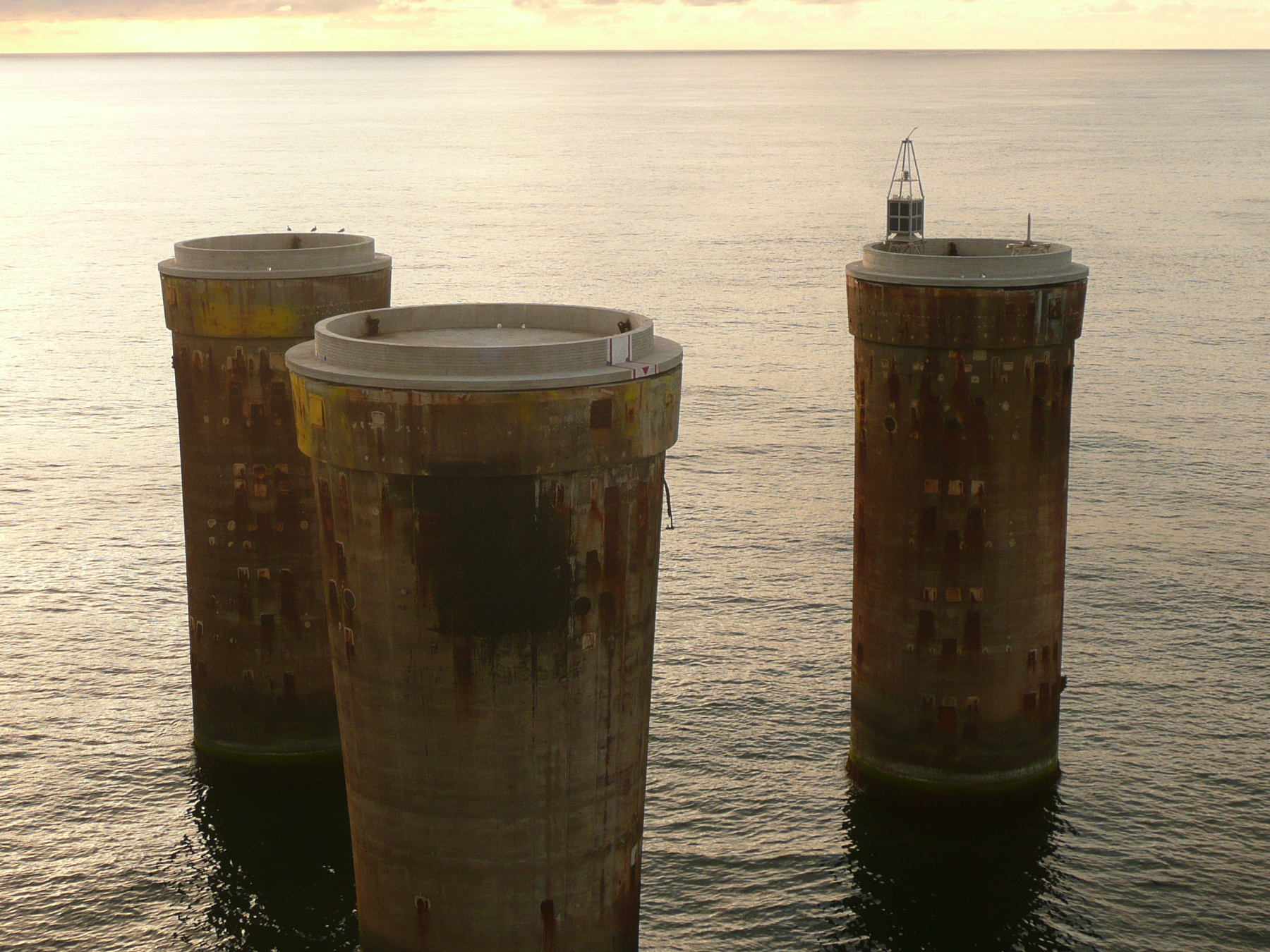
On both of these fields, the concrete structures have been left in place. One is
Frigg TCP2 and the other is Ekofisk T (the Ekofisk Tank).[REMOVE]Fotnote: However, there are several installations on the UK side of the
Frigg Field, but these are not included in this text.
The big question is whether the concrete parts of the Gullfaks platforms will
also be granted an exemption and remain in place. That is not certain.
As noted by John Meling et al. at the engineering firm Dr.techn. Olav Olsen AS
in their “Market report related to cessation and disposal”, the earliest
platforms were not designed to withstand the loads of a removal operation. In
1978, however, the Norwegian Petroleum Directorate (NPD) introduced this as a
design requirement on par with ultimate and serviceability limit states for
installation and operation, making complete removal of newer platforms more
likely than it has been for the platforms shut down to date.[REMOVE]Fotnote: Meling, John; Hausmann Rikke Ellingsen and Faulds, Eric (2018).
“Markedsrapport knyttet til avslutning og disponering/Avslutning og disponering av utrangerte innretninger”, project no. 12635-01,
document no. 12635-01-OO-R-001 (Dr.techn. Olav Olsen AS). (The report was commissioned by the former Norwegian Petroleum Directorate,
now the Norwegian Offshore Directorate.) https://kudos.dfo.no/documents/12201/files/12330.pdf (p. 55). Also published at: https://www.sodir.no/aktuelt/publikasjoner/rapporter/eldre-rapporter/
markedsrapport-knyttet-til-avslutning-og-disponering2/8-beskrivelse-
fjerning-av-bunnfaste-plattformunderstell/ (8.1.2)
As we can see from the illustration, Frigg TCP2 and Statfjord A were built
before these rules were put in place. The Ekofisk Tank is not considered a
“Condeep” platform and is therefore not shown in the illustration, but it may be
regarded under the same “concrete substructure” umbrella as the two
installations mentioned above.
On that basis, it is likely that Statfjord A’s concrete substructure (installed
in 1977) will also be left in place, as removal will probably be assessed as too
risky and costly. By contrast, all the Gullfaks platforms clearly fall within
the period covered by the newer design requirements.
That means that, at least in theory, the Gullfaks platforms’ concrete
substructures—even the enormous C substructure—could be removed. If so, we might almost see a reprise of the tow of the heaviest object ever moved.[REMOVE]Fotnote: Except that the deck—at roughly 50,000 tonnes—will likely be removed.
Given such prospects, it is hardly surprising that how this could be done in
practice should be carefully assessed.
Which scenarios have been developed, and what experience has been gained? That is the topic of the article Refloating or Removing Gullfaks’ Concrete Substructures?