
Food for body and soul

It’s 7:00 p.m. sharp. Oil workers with freshly washed hands glance curiously at the board by the mess hall entrance: What’s for dinner?
A kitchen of routine
The framework for this menu is created onshore. Each meal must include a healthy option. There should be space to choose plenty of vegetables and a vegetarian alternative. A shared framework across the entire continental shelf creates economies of scale in purchasing.
Based on these weekly menus, head chef Perry Igland and his team can prepare a tentative plan, depending on which goods are shipped out.[REMOVE]Fotnote: All statements from Perry Igland (Head Chef) are based on a conversation with Julia Stangeland, Shadé B. Martins, and Ole Kvadsheim (Norsk Oljemuseum), Gullfaks A, June 26, 2024.Even if a shared menu makes his job more routine and less exciting, he still has room to be flexible—like changing which day a particular dish is served.
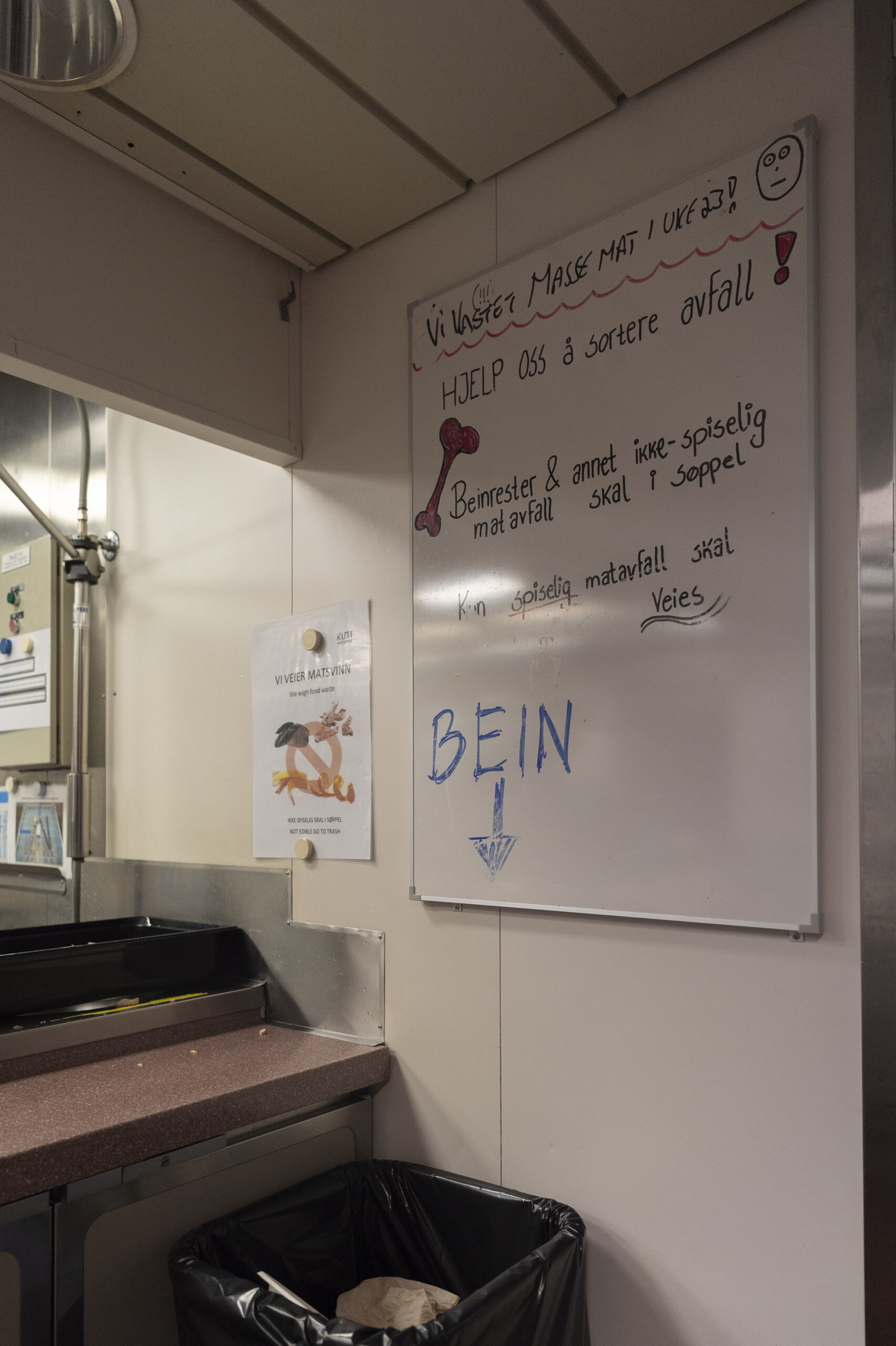
He also tries to plan in ways that reduce food waste.
“Sometimes it’s hard to predict which dish will be the favorite. Other times it’s as simple as word getting around that a certain meal was really good.”
Meal times follow a set schedule, day and night:
- Breakfast: 6:00–7:45 a.m.
- Day Lunch: 11:00 a.m.–1:00 p.m.
- Dinner: 6:00–7:45 p.m.
- Night shift breakfast is also served.
- Night Lunch: 11:00 p.m.–1:00 a.m.
- Coffee breaks in various lounges at 9 a.m., 3 p.m. 9 p.m., and 3 a.m..
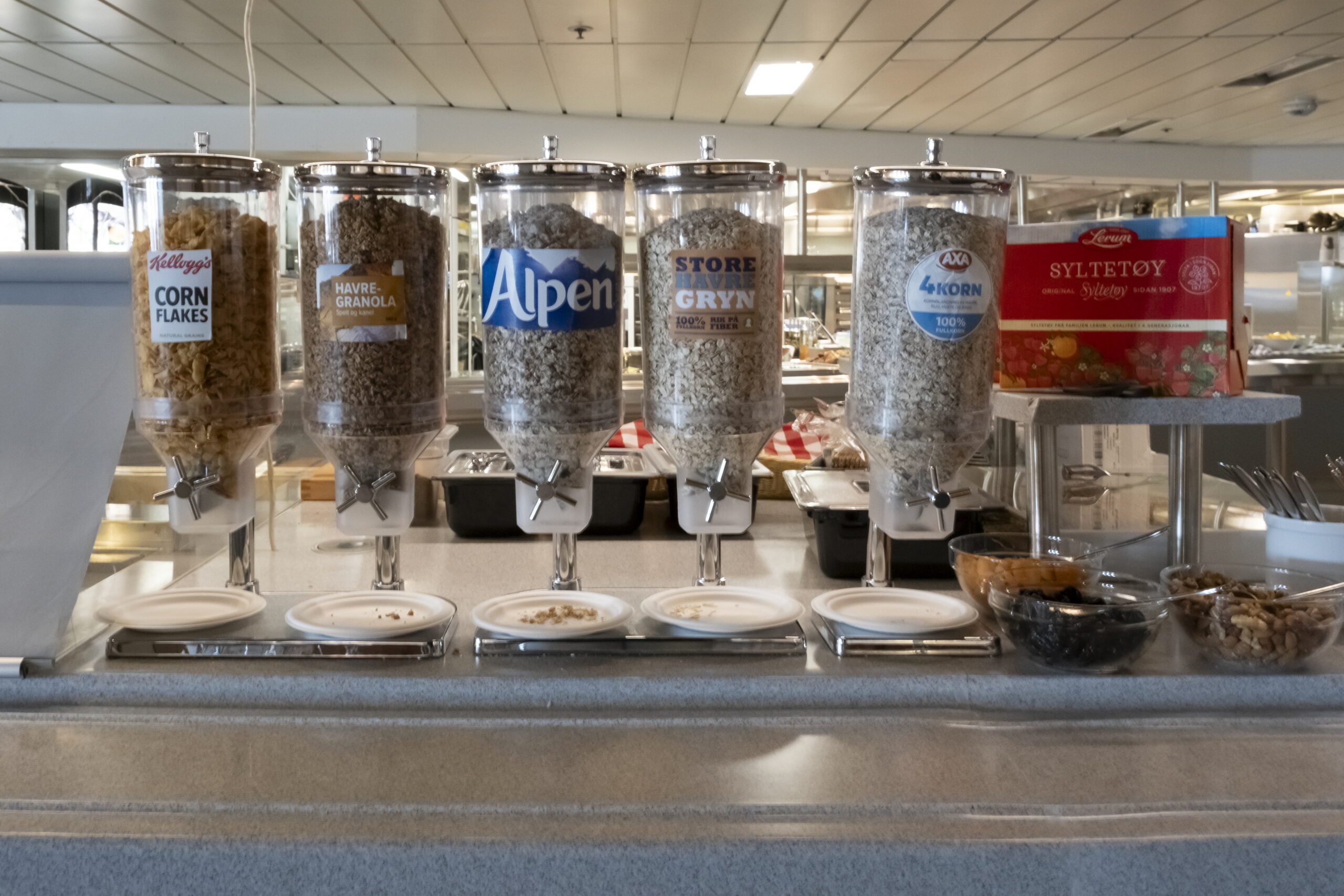
Igland says dinner leftovers are often served at the next day’s lunch.
It’s not just the onshore-designed menus that bring routine. Other changes have contributed too.
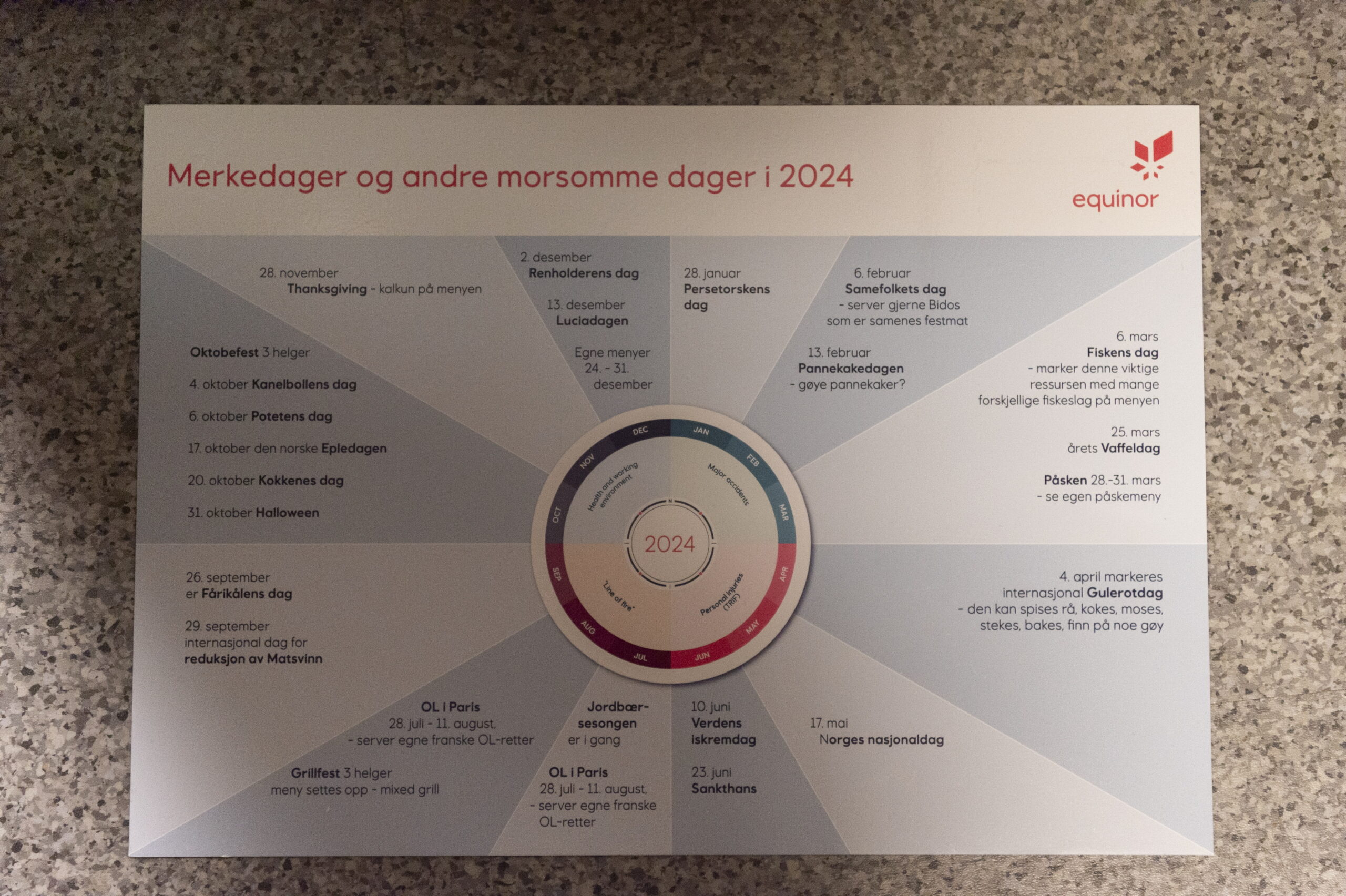
When the Gullfaks field was developed with three platforms in the 1980s, it wasn’t uncommon to have both a baker and a pastry chef onboard. They would even butcher the meat on the platform. Today, it’s mostly semi-prepared and ready-made food.
Another change since the 1980s: the catering staff – who include the kitchen – no longer depart from Florø. During the licensing process for Gullfaks, Statoil (later Equinor) was required to create local jobs in Florø. Today, only a few shore-based positions remain there, and the catering crew travels with everyone else from Bergen Airport Flesland. Substitutes and those supplementing the core crew now come from Equinor’s own staffing system.
Read about food logistics in the article: Ice Cream to Gullfaks A.
Food takes center stage on the platform, important for both body and soul.
Body…
– Usually, offshore oil workers gorge themselves on rich food for the first six months. Then they get smarter.
This was according to catering manager Roar Berggren in a December 1986 interview for Statoil’s internal magazine, Status. His opinion was based on eight years of experience on other oil fields.
Berggren added that they noticed a trend: people became more focused on healthy eating, with vegetables and fruit becoming staples. Dessert was often tied to personal rules—like a reward for completing a workout.[REMOVE]Fotnote: Status (Statoil: norsk): internavis for Statoil-ansatte, 1986, no. 12, “Den første jul om bord,” 11, Nasjonalbiblioteket.
These views still ring true today.
Even nearly 40 years after the first Gullfaks platform opened, there are excellent fitness facilities onboard. And as mentioned, the kitchen – and Equinor management – are committed to offering healthy food options.
Along with food that supports physical health, they aim to make the mealtime setting as health-promoting as possible.
BILDEKARUSELL MED TO BILDER
Head chef Perry Igland explains that during the COVID-19 pandemic they introduced strict rules for hand hygiene. Everyone must wash their hands before entering the dining hall, and if you want to help yourself to a second serving, you must take a new plate and sanitize your hands. And if you’re caught using your phone while standing in the food line, you’ll be told to march right back out and wash your hands again.
Neither Igland nor the health department, nor anyone else, wants infections onboard, whether colds or stomach bugs. For a small community like a platform, where everyone has an important role, even a few sick people can cause major disruption.
Meals and their surroundings are meant to support the body, but they can also serve as a reward for the day’s effort.
…and soul
With long workdays, out at sea, and 14 days away from family and friends, it’s easy to find comfort in food.
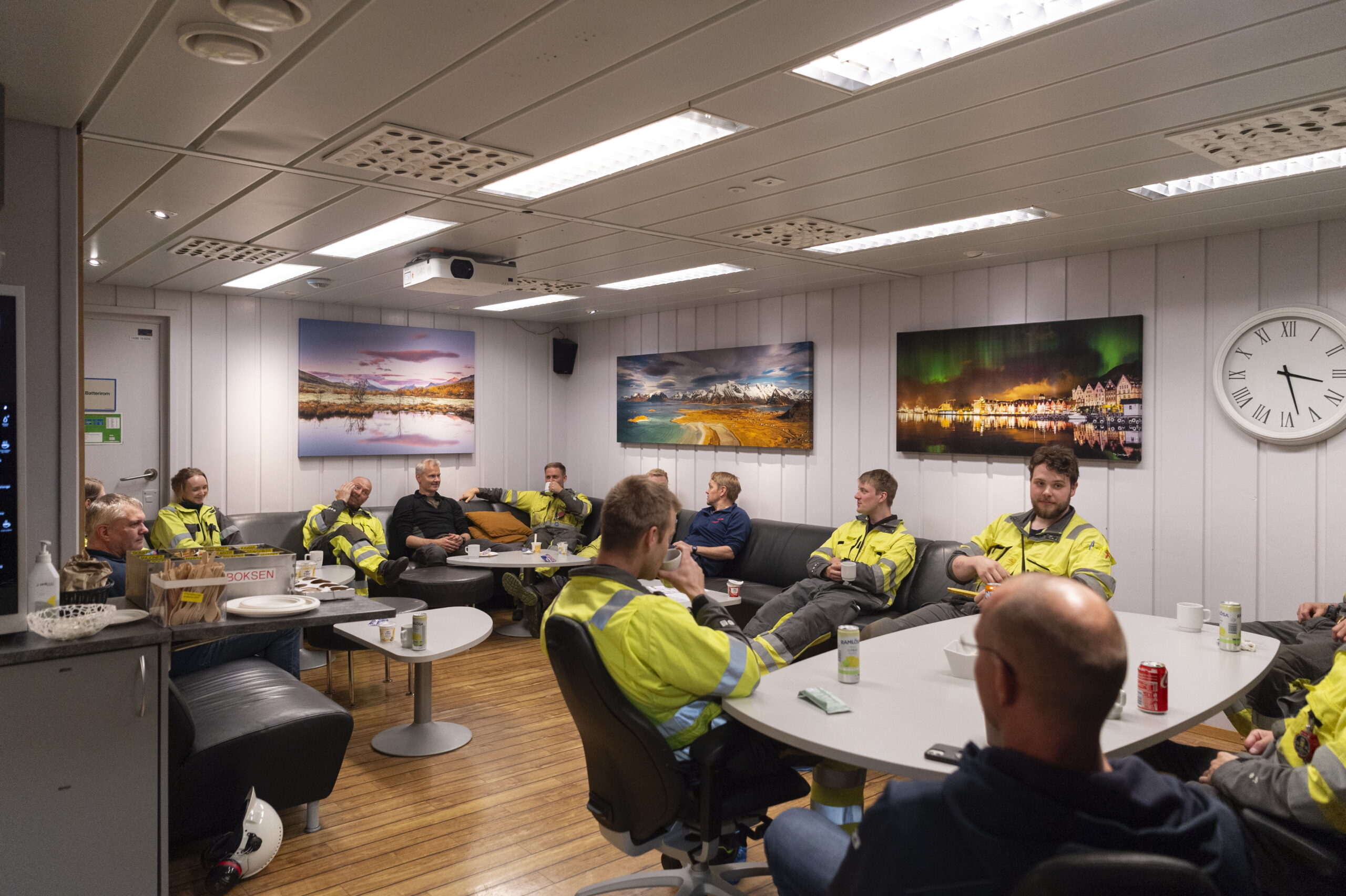
But comfort doesn’t have to come from the food itself. Soul nourishment may just as well come from the environment, conversations with coworkers and shared breaks. This applies both to meals in the mess hall and to breaks taken in department lounges.
The catering staff also strive to bring a sense of normalcy by celebrating holidays like Christmas and New Year, as well as organizing BBQs, waffle days, and Halloween. Food often plays a starring role in these events.
Whether you’re focused on body or soul, the question remains just as relevant: What’s for dinner today?