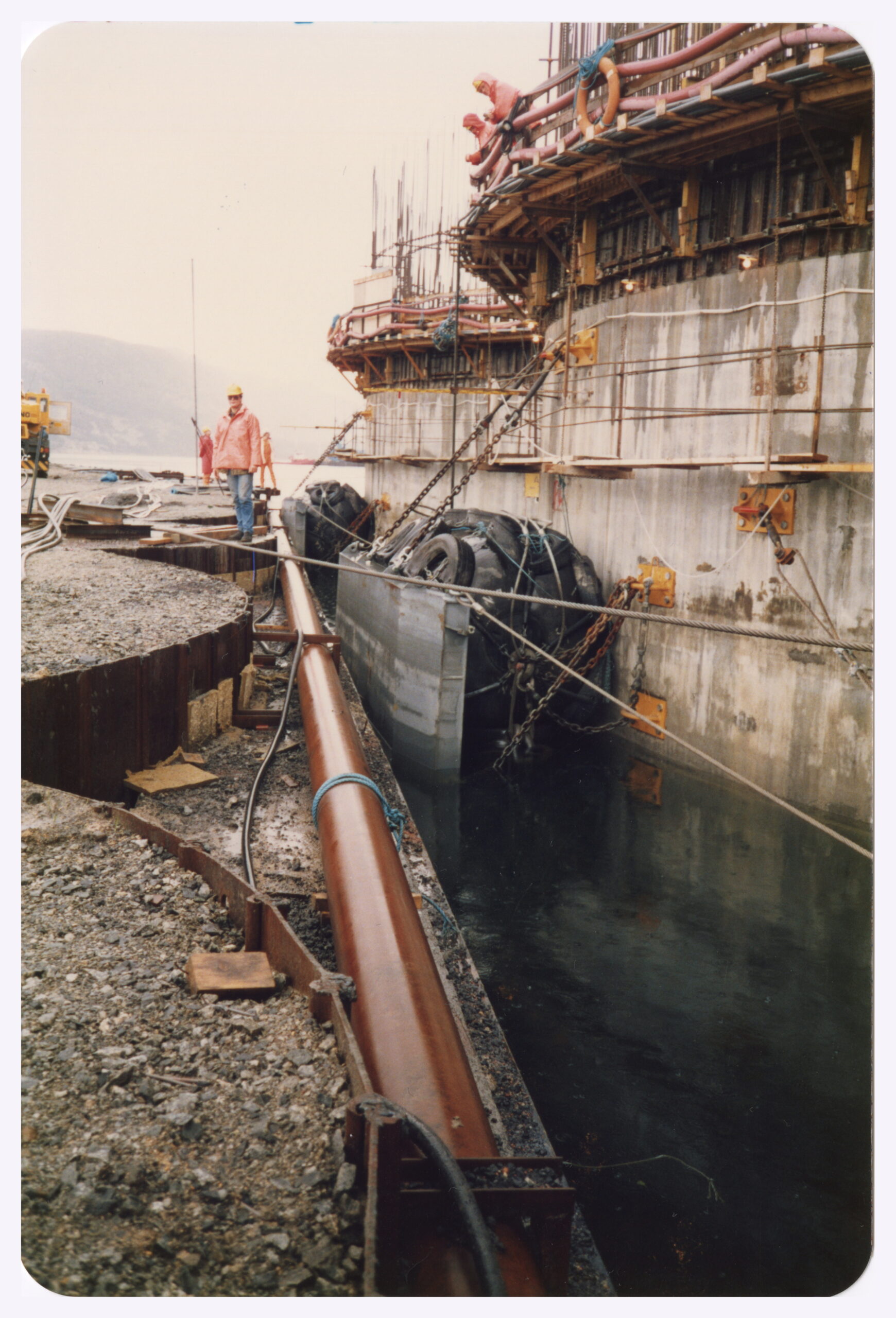
Construction begins in dry dock

In October 1983, Norwegian Contractors (NC) was awarded the contract for building the substructure of Gullfaks B. The contract included preliminary engineering and planning related to the mechanical equipment to be installed in the structure. The total contract value was NOK 940 million in 1983 currency (equivalent to NOK 3.2 billion in 2024).
The planned construction start was set for March 1985.[REMOVE]Fotnote: Status: internavis for Statoil-ansatte. (1983). Nr. 17, s. 2. However, actual work began nearly six months earlier.
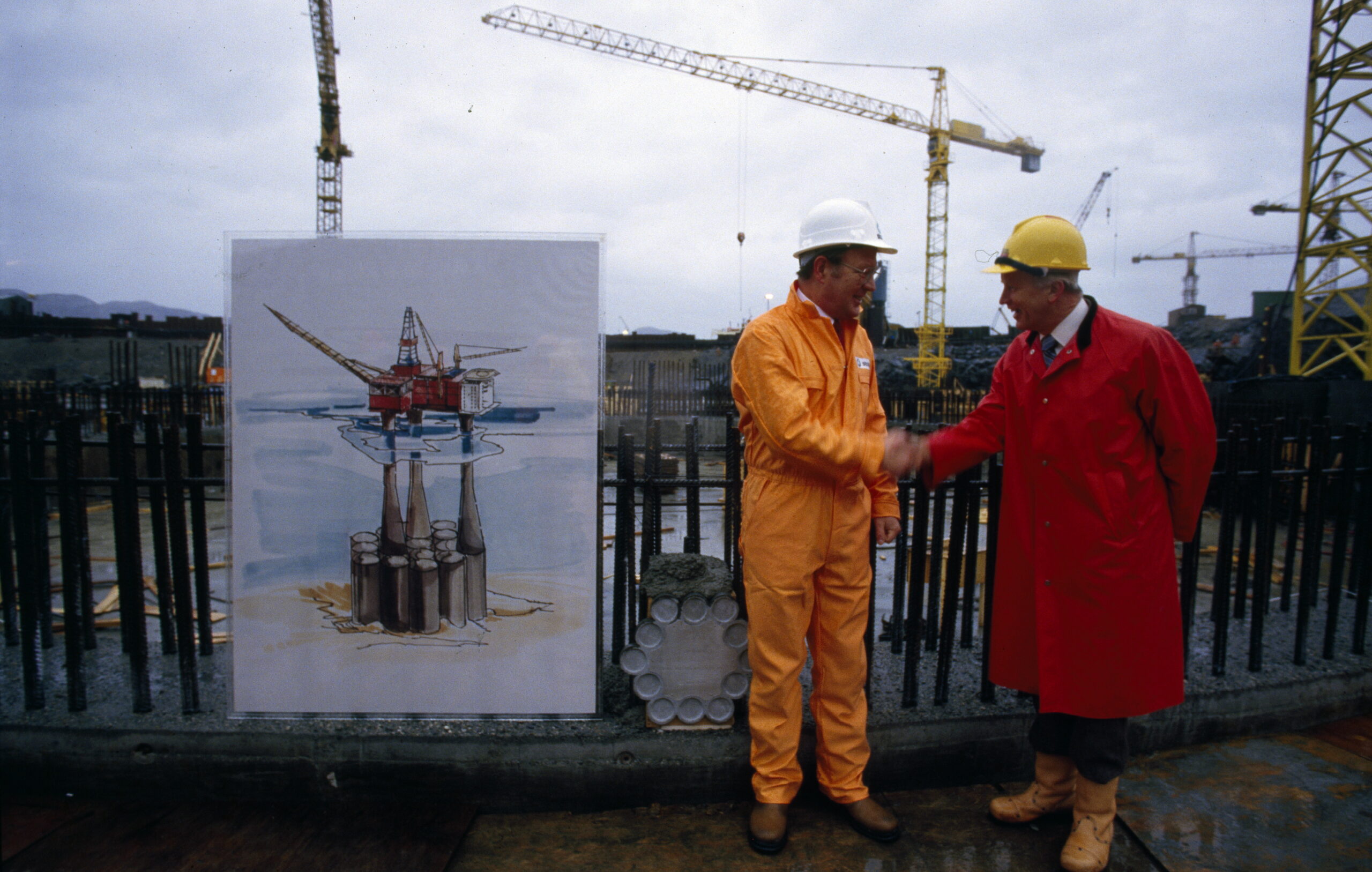
The official kickoff for the Gullfaks B concrete foundation took place on October 22, 1984, in Hinnavågen, Stavanger. Statoil’s technical director, Jon Huslid, and Norwegian Contractors’ director, Sigmund Brusletto, attended the ceremony, where a foundation stone was embedded into the structure at the base of what would become the concrete skirt.[REMOVE]Fotnote: Stavanger Aftenblad 23. oktober 1984. Vått for Gullfaks B. s 5
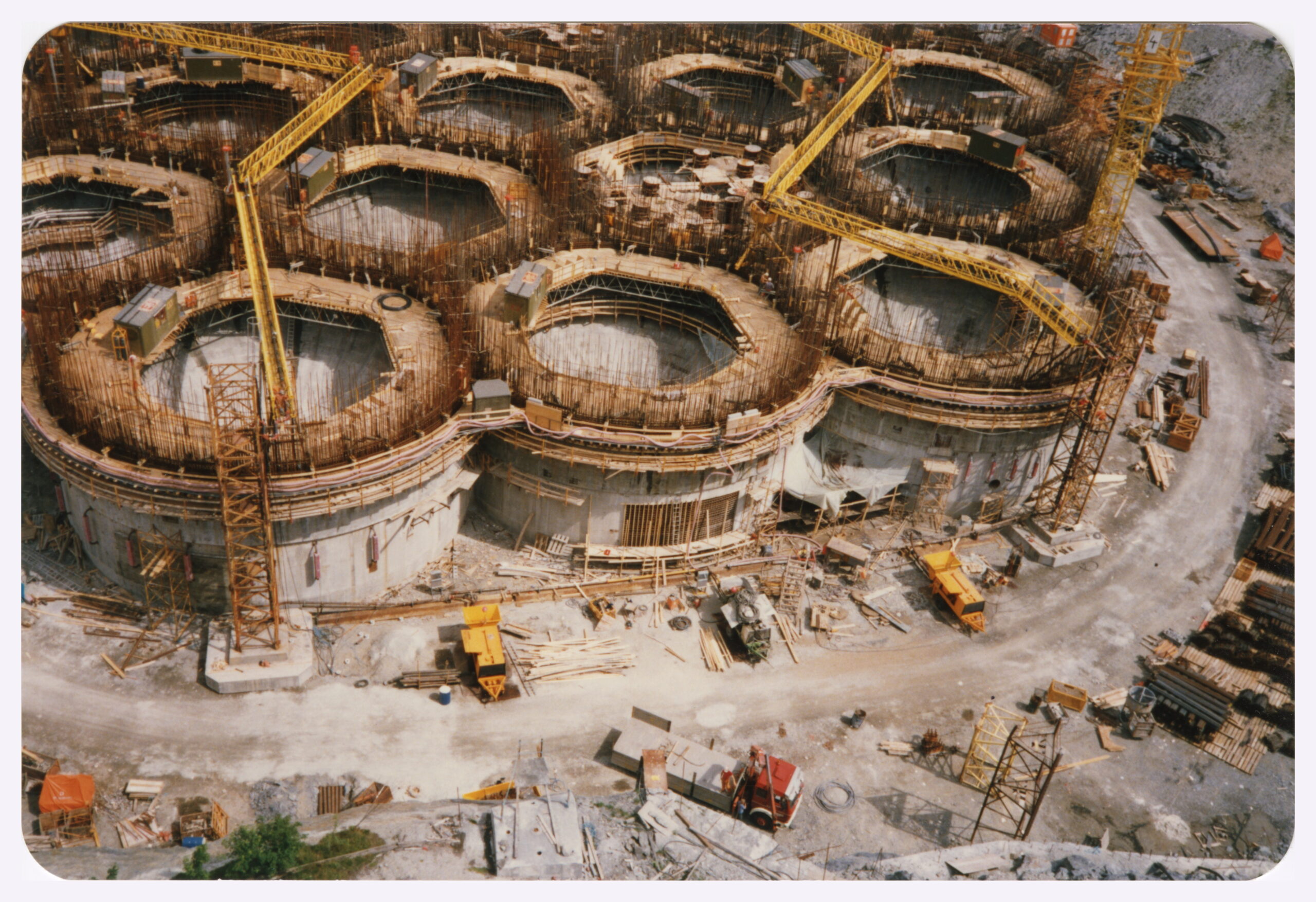
Work in the dry dock continued for about a year before the lower sections of the concrete cells were ready for flotation in Gandsfjorden in the autumn of 1985.
Lease Agreement
NC’s construction site at Hinnavågen was leased from the municipality in three-year terms. Shortly after construction on Gullfaks B began, NC requested either a long-term lease or the option to purchase the site. While the short-term agreements provided flexibility and allowed NC to sign contracts with oil companies extending beyond the lease periods, the limited timeframe made it riskier to invest heavily in the site.
NC indicated that a more predictable agreement would allow the company to invest in additional noise reduction measures. On account of high noise levels, tensions had arisen between NC and local residents during the Gullfaks construction. Neighbors reported significant noise between 6 a.m. and 11 p.m., with peak levels reaching 77 decibels—comparable to a car horn.[REMOVE]Fotnote: Jølbo. O, (05.12.1984). Mindre Støy med Langtidsleie. Stavanger Aftenblad. s. 10
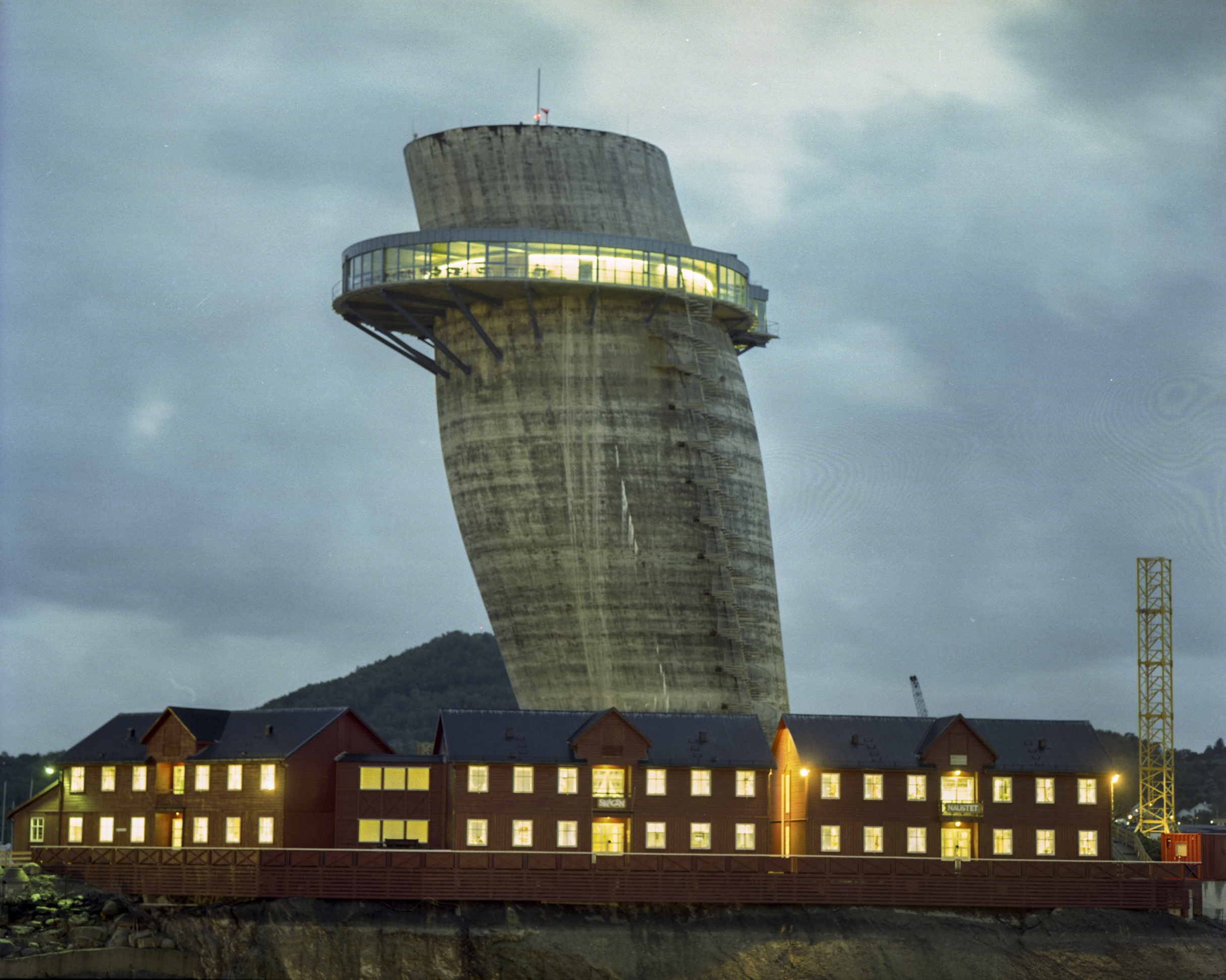
Additionally, NC planned to repurpose “the leaning tower” into a conference venue.
The lease agreement in place during the construction of Gullfaks B expired at the turn of 1987/1988.[REMOVE]Fotnote: Jølbo. O. (23.mai. 1987). Hinnavågen uten plattformer. Stavanger Aftenblad. s. 8 In April 1987, the company secured the long-term lease it had requested—an agreement lasting 20 years.
Construction of the lower sections of the cells remained on schedule, and by late August 1985, the structure was ready to be floated out to Gandsfjorden, where further vertical construction would take place.