
Constructing the concrete foundation for Gullfaks A

- February 2, 1983 – Foundation stone laid by Arve Johnsen
- May 19, 1984 – Concrete base floated out
- June 4, 1984 – Slipforming begins
- August 16, 1985 – Towed from Gandsfjorden to Digernessundet
- November 24, 1985 – Mechanical outfitting scheduled for completion under contract terms
- January 15, 1986 – Mating with the topside
- May 5, 1986 – Tow-out to the field begins
The concrete substructure of Gullfaks A was designed to reach a total height of 160 meters, with 30 meters remaining visible above sea level. The storage cells stood 70 meters tall, while the four shafts extended an additional 90 meters.
Project Director Ole Børre Lilleengen from Statoil led the entire development with a team of approximately 350 people. A total budget of NOK 16 billion (1982 value) was allocated for the platform (both topside and substructure), loading buoy, and the pipeline between the platform and the buoy. Of this, the contract with Norwegian Contractors (NC) for building the concrete substructure was worth NOK 1.5 billion.[REMOVE]Fotnote: Hagland, J. (1983, 3. februar). Stavanger Aftenblad, s. 20.
NC secured the contract for the concrete substructure in the autumn of 1982. The Gullfaks A substructure was the eighth Condeep platform built by NC, following the same construction principles as previous Condeep installations.
Building the foundation in Hinnavågen
The official launch of the project took place on February 2, 1983, when Statoil Director Arve Johnsen laid the foundation stone for Gullfaks A.[REMOVE]Fotnote: Status: internavis for Statoil-ansatte. 1983 Nr. 3 (s.3)

The concrete foundation, consisting of the lower sections of the storage cells, was built in the dry dock at Hinnavågen. The Gullfaks A substructure featured three groups of interconnected cells: two with six cells each and a third with seven.
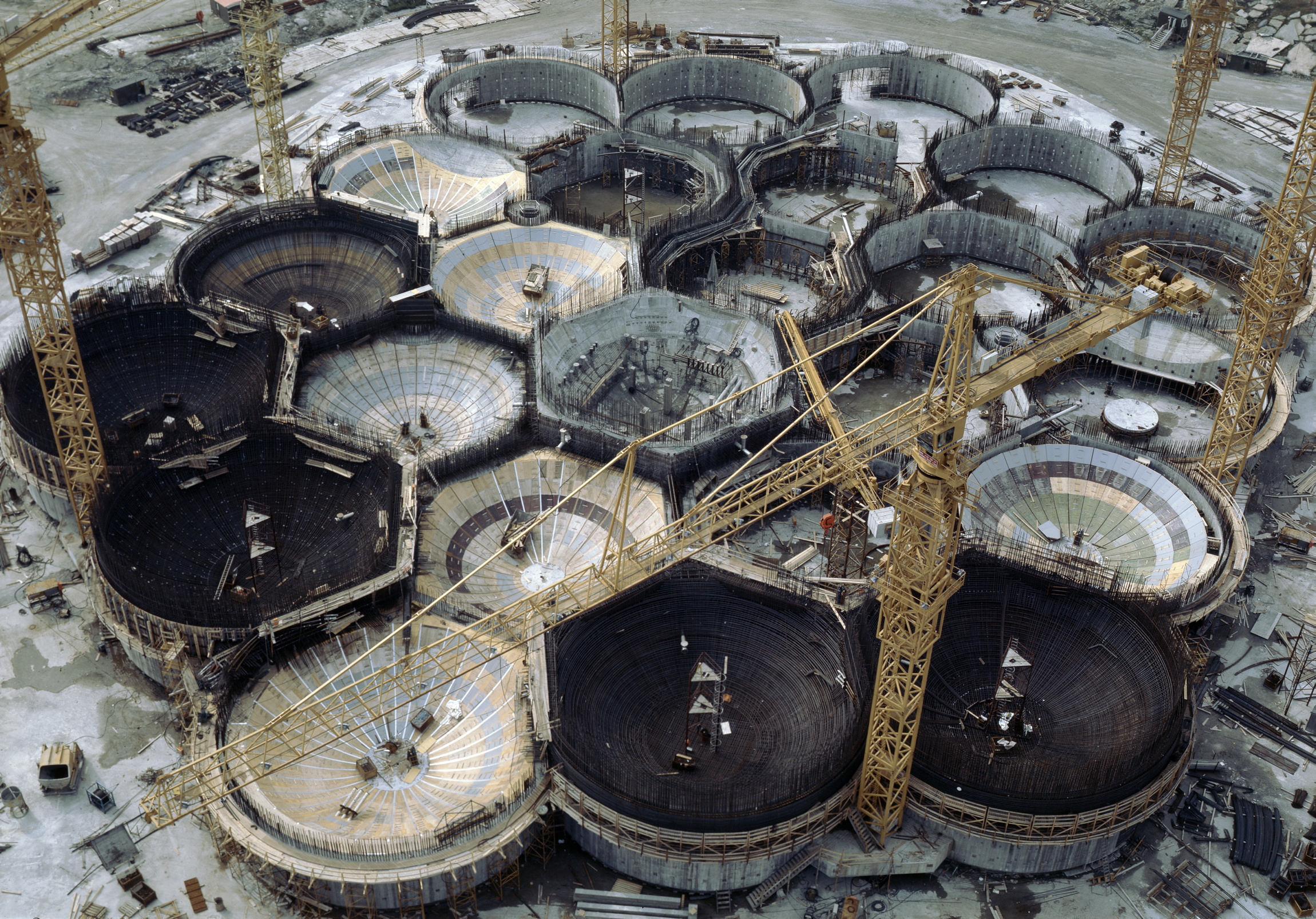
The base structure covered 11,000 square meters—about the size of a large football field.[REMOVE]Fotnote: Hagland, J. (1983, 3. februar). Stavanger Aftenblad, s. 20.The dry dock phase lasted just over a year. At times, construction progressed too quickly. In March 1983, NC announced that 400 workers would be temporarily laid off because work on both the Gullfaks substructure and the slipforming process for Statfjord C was moving ahead too fast[REMOVE]Fotnote: Stavanger Aftenblad. (1983, 28. mars). 400 permitteres i Jåttåvågen. Stavanger Aftenblad, s. 24
Float-out and mooring
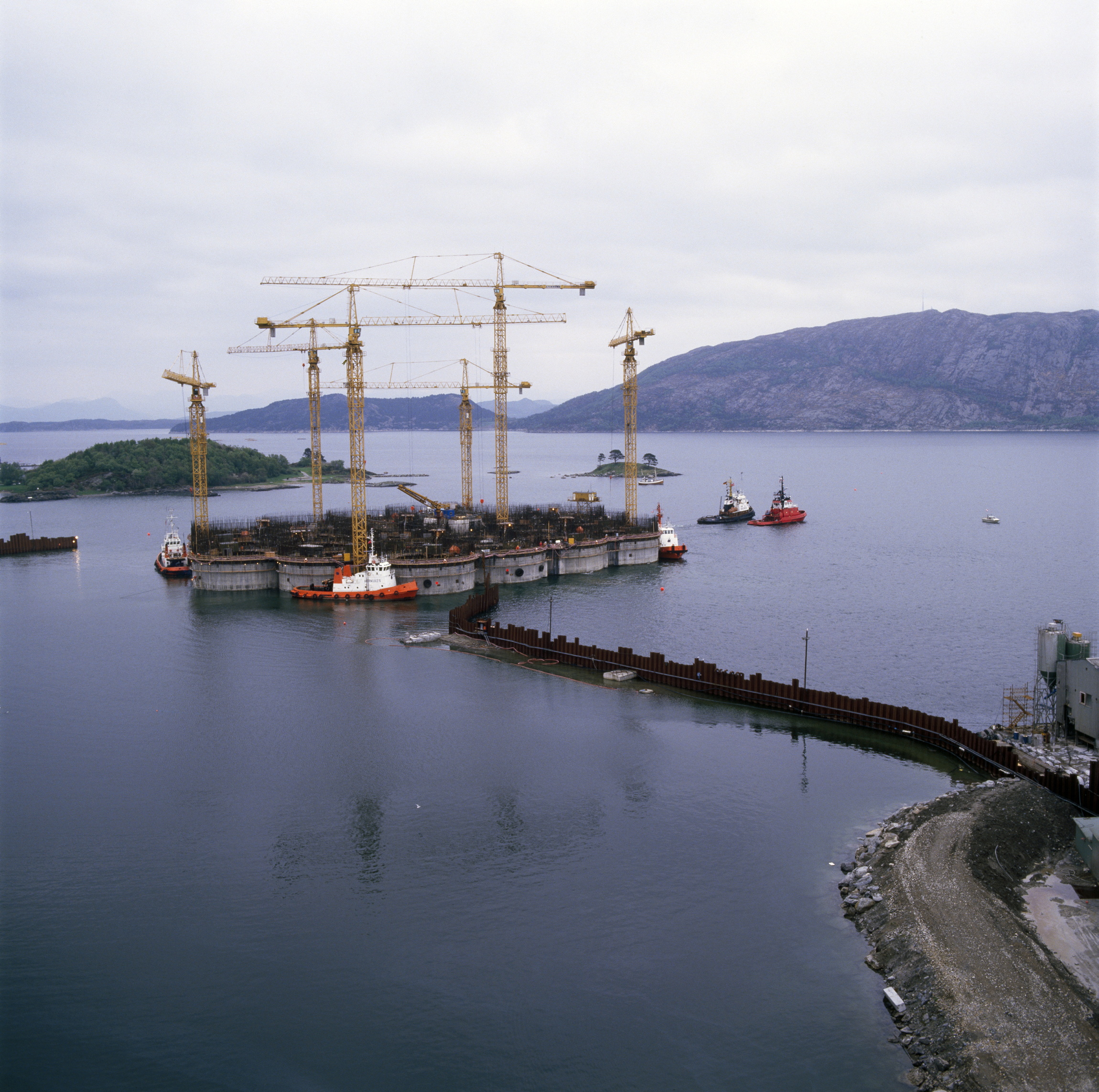
Once the storage cells reached a sufficient height, the dry dock was flooded, allowing the structure to float and be towed to deeper waters in Gandsfjorden. The float-out took place on May 19, 1984. At that point, the structure weighed 93,500 tons. To ensure adequate buoyancy, 30,000 cubic meters of air were pumped beneath the concrete before six tugboats towed it out.[REMOVE]Fotnote: Stavanger Aftenblad. (1984, 21. mai). Gullfaks i medvind. Stavanger Aftenblad, s. 5
The tow-out itself went smoothly, but there was some last-minute drama the week before. Statoil had ordered 4,840 meters of mooring chains, worth NOK 10 million, from the Japanese company Nippon Chain & Anchor Company Ltd. However, just before the float-out, the chains failed Statoil’s quality inspection, making a large portion of them unusable for mooring. The issue was resolved by deploying reserve chains, which provided sufficient mooring until winter, when new deliveries arrived.[REMOVE]Fotnote: Steen-Johnsen, I. (1984, 15. mai). Dårlig stål gir grå hår. Stavanger Aftenblad, s. 6
Meanwhile, construction of the platform topside had already begun 100 kilometers north of Gandsfjorden.