
Aker Stord won the battle for the C deck

Building the deck for Gullfaks C was a major task. Gullfaks C was designed to be a combined drilling, production, and accommodation platform, placed at a depth of 220 meters. It was set to become the heaviest platform in the world, reflected in the value of the deck contract, which amounted to approximately one billion NOK in 1986 prices (2.74 billion NOK in 2023 prices).
Aker Stord in Sunnhordland and Moss Rosenberg Yard in Stavanger had both submitted bids to Statoil, and there was great anticipation about who would win.
Aker Stord or Moss Rosenberg?
Yard management at Aker Stord was brimming with confidence about landing more contracts after building the Gullfaks A topsides. Despite the savings to be had from letting Aker Stord follow up by building the Gullfaks B topsides, Statoil [now Equinor] chose to award that contract to main competitor Rosenberg Verft in Stavanger.
When the yards were now to compete for the award of the C-deck, both spent a great deal of time and money preparing a bid.
Rosenberg director Ole Jacob Haaland estimated that the company had spent 7–8 million NOK in 1986 prices just to create their bid.[REMOVE]
Footnote: 19–22 million NOK in 2023 prices.At its peak, 40 people had been involved in the planning, resulting in a stack of paperwork weighing nearly 100 kg. Aside from the expertise the company gained through the process, the effort was ultimately in vain.[REMOVE]Fotnote: Tagesen, D. (1986, 12. september). «Aker var billigst». Stavanger Aftenblad.
Aker Stord erupted in celebration when Statoil made its decision on September 11, 1986.
Celebration in Sunnhordland
In Sunnhordland, however, spirits were high. Knut Kristiansen, the director of Aker Stord, estimated that the new contract would secure full employment at the yard through the end of 1988. According to the plan, Gullfaks C was to be ready for towing by the summer of 1989. Aker Stord projected that subcontractors would complete work worth between 250 and 350 million NOK in total.
Many of these subcontractors were located in the Hordaland region, which promised significant economic ripple effects for the area. Among the subcontractors was Rosenberg Yard, as well. The two competitors had previously agreed that the losing party would contribute with specific deliveries to the winner.
The contract was celebrated with champagne, despite an ongoing strike at the Norwegian monopoly for wine and spirits (Vinmonopolet).[REMOVE]
Fotnote: Dommersnes, T. D. (1986, 12. september). «Glede i Sunnhordaland». Stavanger Aftenblad, s. 7-8
Moss Rosenberg had to look around for other opportunities.
Future Prospects for Rosenberg
Losing the contract increased uncertainty about whether Rosenberg would have enough future projects to maintain its workforce. In 1986, the Rosenberg yard employed around 800 workers and 500 administrative staff. The loss of the Gullfaks C contract could lead to a slowdown in orders beyond 1987, once the yard completed the Gullfaks B deck.
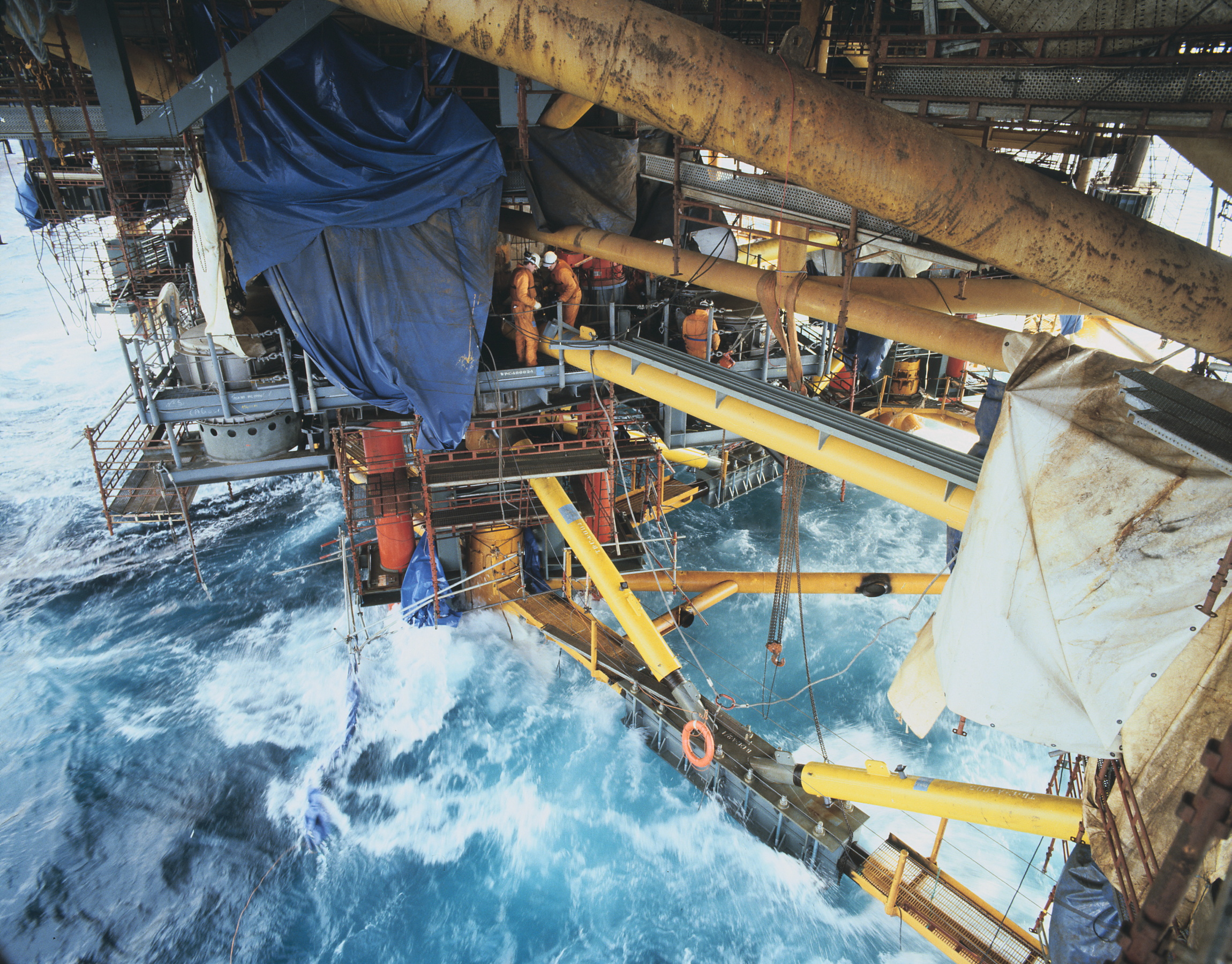
Among the projects Rosenberg was pursuing were steelworks related to the jacking up of Ekofisk, scheduled for the following year, and subsea units for the Tommeliten field.
The Tommeliten projects were particularly interesting, as they marked a kind of starting point for a shift in the shipyard industry. The day after the defeat, Haaland emphasized to Stavanger Aftenblad that Rosenberg aimed to be at the forefront of building equipment for subsea oil and gas extraction. The loss of the Gullfaks C deck contract may have accelerated this transition.
By 1986, Norway was approaching the end of the Condeep era. After Gullfaks C, only three more Condeep platforms were produced in Norway: Draugen (1993), Sleipner A (1993), and Troll A (1995). At the same time, the development of subsea technology gained momentum throughout the 1990s. By 2023, more than half of oil and gas production on the Norwegian continental shelf is carried out through subsea wells.[REMOVE]


Fotnote: Brundtland, E. (2022, 24. mai). 1990-tallet: Eventyr på havets bunn. Petroleumstilsynet. Hentet fra https://www.ptil.no/om-ptil/historikk/historiske-artikler/1990-tallet-eventyr-pa-havets-bunn/
Next stop: the Gullfaks fieldThe Swedish king inspects Gullfaks